
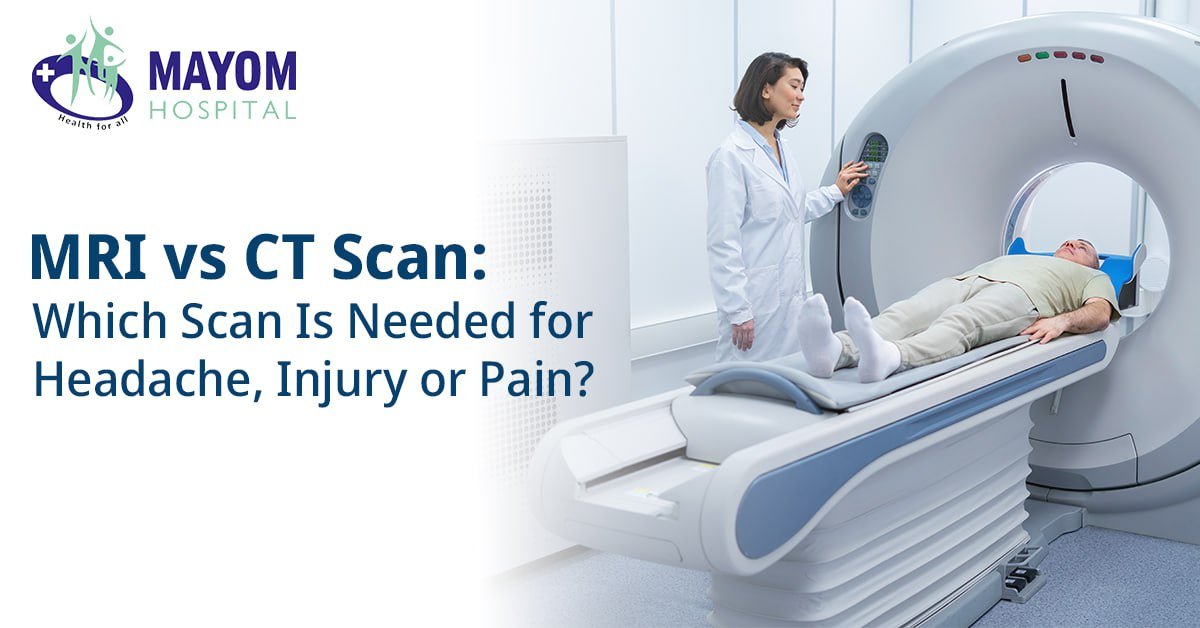
MRI vs CT Scan: Which Scan Is Needed for Headache, Injury or Pain?
When doctors recommend a brain scan for headaches, head injuries, or unexplained pain, many patients get confused between an MRI and a CT scan. Both are advanced imaging techniques, but they serve different purposes. Knowing the difference can help you understand why your doctor has suggested a particular test and how it helps in accurate diagnosis—especially when evaluated by the Best Radiologist in Gurgaon or the Best Radiologist in Haryana at the Best hospital in Gurgaon.
What Is a CT Scan?
A CT (Computed Tomography) scan uses X-rays to create detailed cross-sectional images of the body. It is fast, widely available, and especially useful in emergency situations.
When Is a CT Scan Recommended?
A CT scan is usually the first choice in urgent conditions such as:
- Head injury or trauma
- Suspected brain bleeding or stroke
- Skull fractures
- Sudden severe headache
- Accidents or falls
Because CT scans are quick (often completed in minutes), they are ideal for emergency diagnosis. For example, after a road accident, a CT scan can quickly detect internal bleeding or fractures, allowing doctors to act immediately.
Advantages of CT Scan
- Very fast imaging
- Ideal for emergencies
- Excellent for detecting bleeding and bone injuries
Limitations
- Uses radiation
- Less detailed for soft tissues compared to MRI
What Is an MRI Scan?
MRI (Magnetic Resonance Imaging) uses strong magnetic fields and radio waves to produce highly detailed images of soft tissues. It does not use radiation.
When Is an MRI Recommended?
MRI is preferred for:
- Chronic or recurring headaches
- Brain tumours
- Nerve-related pain
- Spine and disc problems
- Migraine evaluation
- Seizures or unexplained neurological symptoms
MRI provides much clearer images of the brain, nerves, muscles, and soft tissues, making it ideal for detailed evaluation when the condition is not an emergency.
Advantages of MRI
- No radiation exposure
- Excellent soft tissue detail
- Better for long-term or chronic conditions
Limitations
- Takes more time than CT
- Not suitable for patients with certain implants or metal devices
- More expensive than CT
MRI vs CT: Which One Do You Need?
For Headache
- Sudden, severe headache: CT scan (to rule out bleeding)
- Chronic or recurring headache: MRI (to evaluate brain structures and nerves)
For Head Injury
- Accidents or trauma: CT scan first
- Persistent symptoms after injury: MRI for deeper evaluation
For Pain or Neurological Symptoms
- Nerve pain, weakness, numbness: MRI
- Suspected fracture or bleeding: CT scan
The final decision depends on your symptoms, medical history, and clinical findings. This is why consultation with the Best Radiologist in Gurgaon or the Best Radiologist in Haryana is crucial for accurate interpretation and diagnosis.
Importance of Choosing the Right Hospital
Advanced imaging is only effective when combined with expert analysis. A Best hospital in Gurgaon ensures:
- Latest MRI and CT technology
- Accurate imaging protocols
- Experienced radiologists
- Quick reporting for faster treatment decisions
An incorrect or delayed diagnosis can lead to unnecessary anxiety or improper treatment. That’s why quality imaging and expert interpretation go hand in hand.
Final Thoughts
Both MRI and CT scans are powerful diagnostic tools, but they are used for different medical situations. CT scans are ideal for emergencies and injuries, while MRI scans provide deeper insights into chronic pain, headaches, and neurological conditions. If you’re unsure which scan you need, always follow your doctor’s advice and choose a centre with experienced radiologists and advanced facilities.
Accurate imaging, guided by the Best Radiologist in Gurgaon or Best Radiologist in Haryana, plays a key role in early diagnosis, correct treatment, and better health outcomes.