
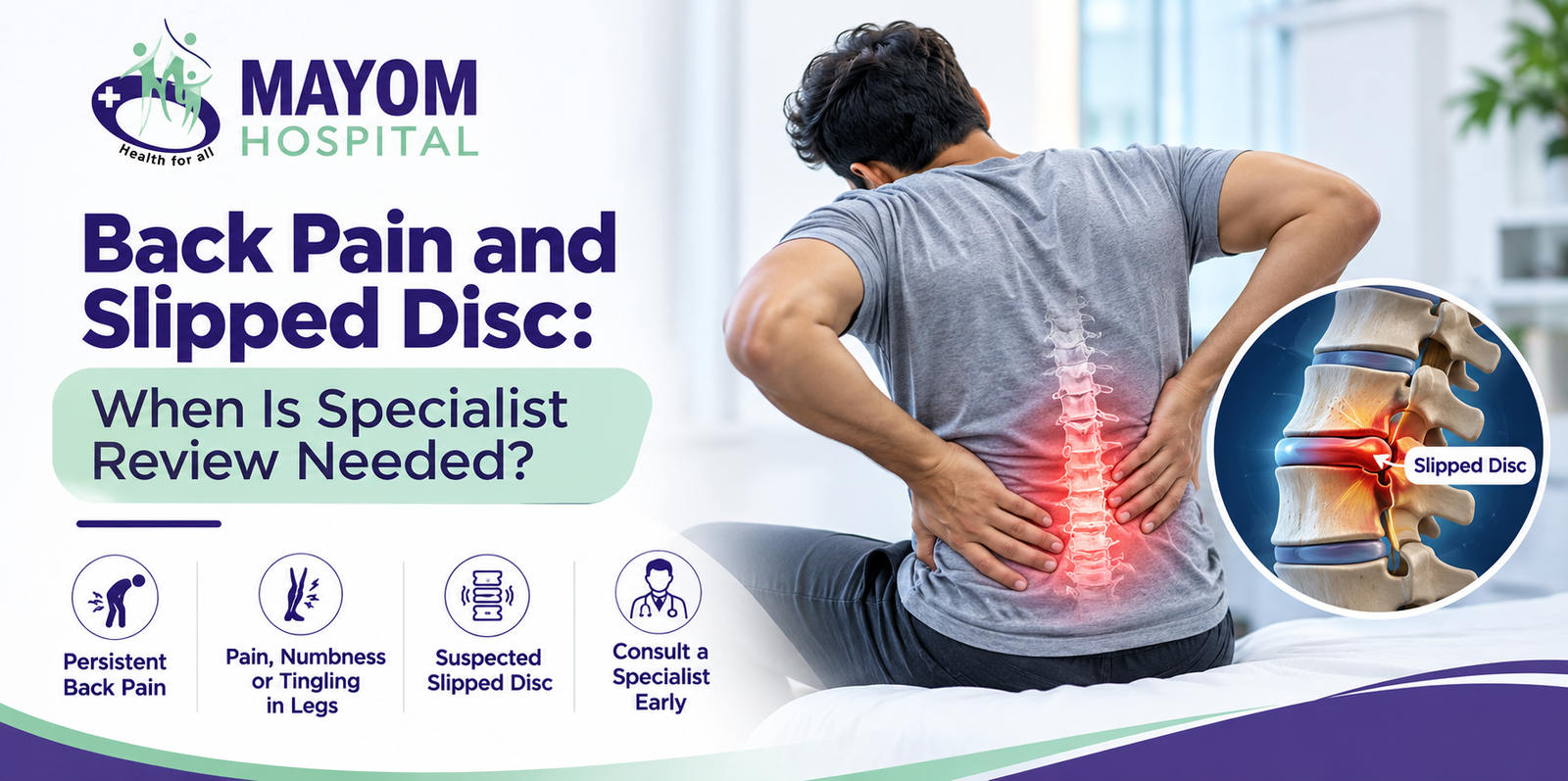
Back Pain and Slipped Disc: When Is Specialist Review Needed?
At some point, almost everyone gets back pain. You bend to pick something up, sit through a long day at a desk, or sleep in an odd position, and the next morning your back lets you know about it. For most people, it settles within a few days to a few weeks.
But for some, the pain refuses to go away. It spreads down the leg, keeps you awake at night, or comes with tingling or weakness. Then the questions start. Is this a slipped disc? Do I need an MRI? Will I need surgery? And when exactly should I see a doctor?
This guide answers these questions in plain language, so you know what is normal, what is not, and when it is time to get a specialist to look at your back.
Understanding Your Spine in Simple Terms
Your spine is a stack of bones called vertebrae. Between each pair sits a soft, rubbery cushion called a disc. A disc has a tough outer ring and a gel-like centre, and its job is to absorb shock and let your back bend and twist.
Running through the middle of the spine is the spinal canal, which carries the spinal cord and nerves. Nerve roots branch out at every level to supply your legs, arms and organs.
The lower back, also known as the lumbar spine, carries the most weight and does the most bending. This is why it is the most common place for back-related problems.
You can read more about the functions of your spine.
What Is a Slipped Disc?
"Slipped disc" is a popular term, but the disc does not actually slip. Doctors call it a herniated or prolapsed disc.
It happens when the soft centre pushes out through a weak spot in the disc's outer ring. If the bulge presses on a nearby nerve, it can cause pain, numbness or weakness along the path of that nerve.
When a lumbar disc presses on the large sciatic nerve, it can cause sciatica. This is pain that travels from the lower back or buttock down the back of the leg, sometimes reaching the foot.
Many people describe it as sharp, burning or like an electric shock. It may become worse when sitting, coughing or sneezing.
Read more about sciatica pain and its treatment.
Common Causes of Back Pain
Not all back pain is caused by a slipped disc. In fact, most back pain is not related to a herniated disc.
Common causes include:
Muscle or Ligament Strain
This is one of the most common causes of back pain. It can happen due to lifting heavy objects, sudden movements or poor posture.
Herniated Disc
A herniated disc occurs when disc material pushes out and may press against a nearby nerve, causing pain, numbness or weakness.
Degenerative Changes
Discs and joints can gradually wear down with age. This is a normal process, but in some people it may cause pain and stiffness.
Spinal Stenosis
Spinal stenosis refers to the narrowing of the spinal canal. It is more common in older adults and can cause leg pain or heaviness while walking.
Spondylolisthesis
This condition occurs when one vertebra slips forward over another, potentially causing back pain or nerve-related symptoms.
Osteoporosis and Fractures
Weak bones can fracture with little force, especially in older adults and postmenopausal women.
Learn more about how calcium deficiency affects bones.
Sacroiliac Joint Problems
Problems with the sacroiliac joint can cause pain in the lower back and buttock area.
Poor Posture and Lifestyle Habits
Long hours of sitting, weak core muscles, excess weight and lack of exercise can contribute to back pain.
Other Medical Conditions
Kidney stones, infections and, rarely, tumours can also cause back pain. This is one reason why persistent or unusual back pain should be assessed by a doctor.
If your back pain comes with burning urination or other urinary symptoms, you may need an evaluation from a specialist in the nephrology department.
Symptoms of a Slipped Disc
A herniated disc can cause different symptoms depending on its location and whether it presses on nearby nerves.
Common symptoms include:
Lower back pain that spreads to the buttock, thigh, calf or foot.
Burning, tingling or pins and needles in the leg or foot.
Numbness in a particular area of the leg.
Weakness in the leg or foot, such as difficulty lifting the foot while walking.
Pain that becomes worse with sitting, bending, coughing or sneezing.
Neck pain spreading into the shoulder or arm if the disc problem is in the cervical spine.
It is important to understand that some people may have a disc bulge on a scan without experiencing any symptoms. A scan finding alone does not necessarily mean there is a problem that needs treatment.
Red Flags: When Should You Get Medical Help Urgently?
Most back pain is not dangerous, but certain symptoms need immediate medical attention.
Go to the emergency department right away if you experience back pain along with:
Loss of control over urine or stool, or difficulty passing urine.
Numbness in the groin or inner thighs, also known as the saddle area.
Sudden or severe weakness in one or both legs.
Back pain after a significant fall, accident or injury.
Fever, chills or unexplained weight loss along with back pain.
These symptoms can indicate cauda equina syndrome, a serious condition in which nerves at the bottom of the spinal canal become compressed.
It is a medical emergency, and delaying treatment can lead to permanent damage.
When Is a Specialist Review Needed?
You do not need to rush to a specialist for every backache. However, you should book a consultation with an orthopedic doctor or spine specialist if:
Your pain lasts more than 2 to 4 weeks despite rest, simple medicines and gentle activity.
Pain travels down the leg below the knee, especially with tingling or numbness.
You experience leg or foot weakness, even if it is mild.
Pain wakes you up at night or does not improve when you change position.
The pain starts after an injury or fall.
You are over 50, or have a history of cancer, osteoporosis, long-term steroid use or a weak immune system and develop new back pain.
Your pain is steadily getting worse or you have experienced repeated episodes.
Back pain is affecting your daily activities, sleep or work.
An orthopedic specialist can assess your symptoms, identify the possible cause and recommend an appropriate treatment plan.
How Do Doctors Diagnose Back Pain and Slipped Disc?
Good treatment depends on an accurate diagnosis. This usually starts with a conversation about your symptoms and a physical examination.
Medical History
The doctor will ask when the pain started, where it travels, what makes it better or worse, and whether you have numbness or weakness.
They may also ask about your work, activity level and any previous injuries.
Physical Examination
The doctor checks your posture, movement, tenderness, muscle strength, reflexes and sensation in the legs.
Simple tests, such as lifting your straightened leg while lying down, can help identify whether a nerve is irritated.
X-ray
An X-ray helps doctors examine the bones, spinal alignment and signs of wear or fracture.
However, it does not directly show the discs or nerves.
You can learn more about the hospital's X-ray services.
MRI Scan
MRI is useful for examining discs, nerves and other soft tissues.
Doctors may recommend an MRI when symptoms persist, when there is nerve involvement or weakness, when red-flag symptoms are present, or when surgery or an injection is being considered.
CT Scan, Nerve Studies and Blood Tests
These tests may be used in selected cases, such as when an MRI is not possible or when an infection or another underlying cause is suspected.
Learn more about CT scan services.
A common misunderstanding is that everyone with back pain needs an MRI. Most people with simple back pain do not, and scans can show age-related changes that may not be the actual cause of pain.
Your doctor will decide which tests are necessary based on your symptoms and examination.
Treatment for Back Pain and Slipped Disc: Most People Do Not Need Surgery
The good news is that the majority of people with a slipped disc improve without an operation, often within weeks to a few months.
Treatment usually progresses step by step, depending on the severity of symptoms and the patient's condition.
1. Staying Active with Sensible Rest
A day or two of rest may be helpful, but prolonged bed rest can slow recovery.
Gentle walking and normal daily activities, within your comfort level, help most people recover.
2. Medicines
Your doctor may recommend pain relievers, anti-inflammatory medicines, muscle relaxants or medicines for nerve pain for a limited period.
Take medicines only as advised by your doctor and avoid long-term self-medication.
3. Physiotherapy
Physiotherapy plays an important role in managing back pain and supporting recovery.
A qualified physiotherapist can guide you through exercises designed to:
Strengthen core muscles.
Improve flexibility.
Support better posture.
Improve movement.
Reduce the risk of future episodes.
For many people, physiotherapy is an important part of treatment.
You can also read about pain management with physiotherapy.
4. Heat, Cold and Posture Changes
Heat can help relax tight muscles, while cold may help ease acute inflammation.
Making simple changes to your chair, screen height and sleeping position can also reduce strain on your back.
5. Injections
If pain is severe or persistent, an epidural or targeted steroid injection near the irritated nerve may help reduce inflammation and provide relief.
This may also help patients progress with physiotherapy.
Injections are not a permanent cure, but they can be useful in selected cases.
Learn more about the hospital's pain medicine services.
6. Surgery
Surgery is considered only in specific situations, such as:
Progressive weakness or signs of cauda equina syndrome, which is a medical emergency.
Severe leg pain that continues despite several weeks to months of appropriate non-surgical treatment.
Pain that is so disabling that normal daily activities become difficult, with scan findings that match the symptoms.
Procedures may include removing the part of the disc pressing on the nerve, known as microdiscectomy, or decompression for narrowed spinal canals. In some cases, spinal fusion may be considered.
Modern techniques may be minimally invasive, and recovery depends on the procedure and the patient's condition.
Your surgeon will explain which option is appropriate and what to expect.
Read more about the hospital's spine surgery services.
Recovery After a Slipped Disc: What to Expect
With non-surgical treatment, many people feel significantly better within 4 to 12 weeks.
Leg pain often improves before back pain does. Numbness may take longer to settle.
After surgery, recovery depends on the type of procedure performed. Walking is usually encouraged early, and a structured physiotherapy plan can help patients return to routine activities.
Your surgeon will guide you on when to resume work, driving and exercise.
How to Prevent Back Pain and Slipped Disc Recurrence
Disc problems can return, but a few healthy habits may help lower the risk.
Move Regularly
If you work at a desk, get up and walk every 30 to 45 minutes.
Strengthen Your Core and Back Muscles
Regular exercises recommended by a physiotherapist can help support your spine.
Lift Objects Correctly
Bend your knees, keep the load close to your body and avoid twisting while lifting heavy objects.
Maintain a Healthy Weight
Extra body weight puts additional load on the lower back.
Improve Your Workspace Setup
Keep your screen at eye level and your feet flat on the floor while sitting.
Choose a Supportive Mattress
Use a supportive mattress and avoid sleeping positions that strain your back.
Avoid Smoking
Smoking reduces blood supply to the discs and can slow healing.
Stay Physically Active
Walking, swimming and yoga, when appropriate for your condition, can help maintain mobility and strength.
Back Pain in Women, Older Adults and Young People
Back pain can affect people of different age groups and may have different contributing factors.
Pregnancy and After Delivery
Back pain is common during pregnancy and after delivery as the body undergoes physical changes.
Safe exercise, posture advice and physiotherapy may help.
Read more about exercise during pregnancy.
Women After Menopause
Bone loss can increase the risk of fractures. Persistent back pain after menopause should be evaluated by a doctor.
Older Adults
Spinal stenosis and osteoporosis are more common in older adults. New or persistent back pain should be assessed.
Teenagers and Young Adults
Heavy school bags, long study hours with poor posture and sports injuries can contribute to back pain in younger people.
Where to Get Back Pain Treatment in Gurgaon?
If your back pain is not settling, an orthopedic consultation at Mayom Hospital can be a sensible first step.
The doctor can examine you, decide whether tests are needed and recommend a treatment plan that may include medicines, physiotherapy and, only if required, further procedures.
Mayom Hospital in Sector 41, Gurgaon, has an orthopedics department along with diagnostic facilities such as X-ray and CT scan.
This can help patients access evaluation and diagnostic services at one location.
Frequently Asked Questions About Back Pain and Slipped Disc
1. Is a slipped disc a serious condition?
Usually not. Most slipped discs improve with time, medicines and physiotherapy. However, progressive weakness or loss of bladder or bowel control requires emergency medical attention.
2. How long does a slipped disc take to heal?
Many people improve within 4 to 12 weeks, although some may take longer. Leg pain generally eases before back pain, while numbness can take more time to settle.
3. Do I need an MRI for back pain?
Not always. Doctors usually recommend an MRI when pain persists beyond several weeks, nerve symptoms or weakness are present, or surgery or an injection is being planned. Red-flag symptoms need prompt medical assessment.
4. Will I need surgery for a slipped disc?
Most people do not need surgery. It may be considered when there is progressive weakness, serious nerve compression such as cauda equina syndrome, or severe pain that does not improve with appropriate non-surgical treatment.
5. Can a slipped disc heal on its own?
Often, the body reabsorbs some of the herniated material over time, and symptoms gradually settle. Physiotherapy and staying active within your comfort level can support recovery.
6. Is bed rest good for back pain?
Only briefly. Long periods of bed rest can slow recovery. Gentle movement and staying as active as your comfort allows are usually better.
7. What is sciatica?
Sciatica is pain that travels along the sciatic nerve, from the lower back or buttock down the leg. It is often caused by a herniated disc or narrowing of the spinal canal pressing on a nerve.
8. Which exercises are good for back pain?
Walking, gentle stretching, core strengthening and swimming may help. However, the right exercises depend on your condition. Consult a doctor or physiotherapist before starting, especially if you have a disc problem.
9. Can I go to the gym with a slipped disc?
Only after your doctor confirms that it is safe. Heavy lifting and high-impact exercise may worsen symptoms. A guided exercise plan is safer.
10. Which doctor should I see for back pain and slipped disc?
You can start with an orthopedic doctor or spine specialist. They will examine you, recommend tests if needed and guide your treatment.
11. Can back pain be a sign of something else?
Yes. Sometimes back pain is associated with kidney problems, infections, fractures or, rarely, tumours. Persistent or unusual back pain should be evaluated.
12. When is back pain an emergency?
If back pain is accompanied by loss of bladder or bowel control, numbness in the groin area, sudden severe leg weakness, high fever or follows a major injury, seek emergency medical care immediately.
Book a Consultation at Mayom Hospital
Don't put up with back pain that keeps coming back or travels down your leg. A proper evaluation can help identify the cause and provide a suitable treatment plan.
If you are experiencing persistent back pain or symptoms of a slipped disc, contact Mayom Hospital to book an appointment.
Mayom Hospital
D-Block, 19, S City Road Number 1, South City I, Sector 41, Gurgaon, Haryana 122001
Phone: 0124-4111880