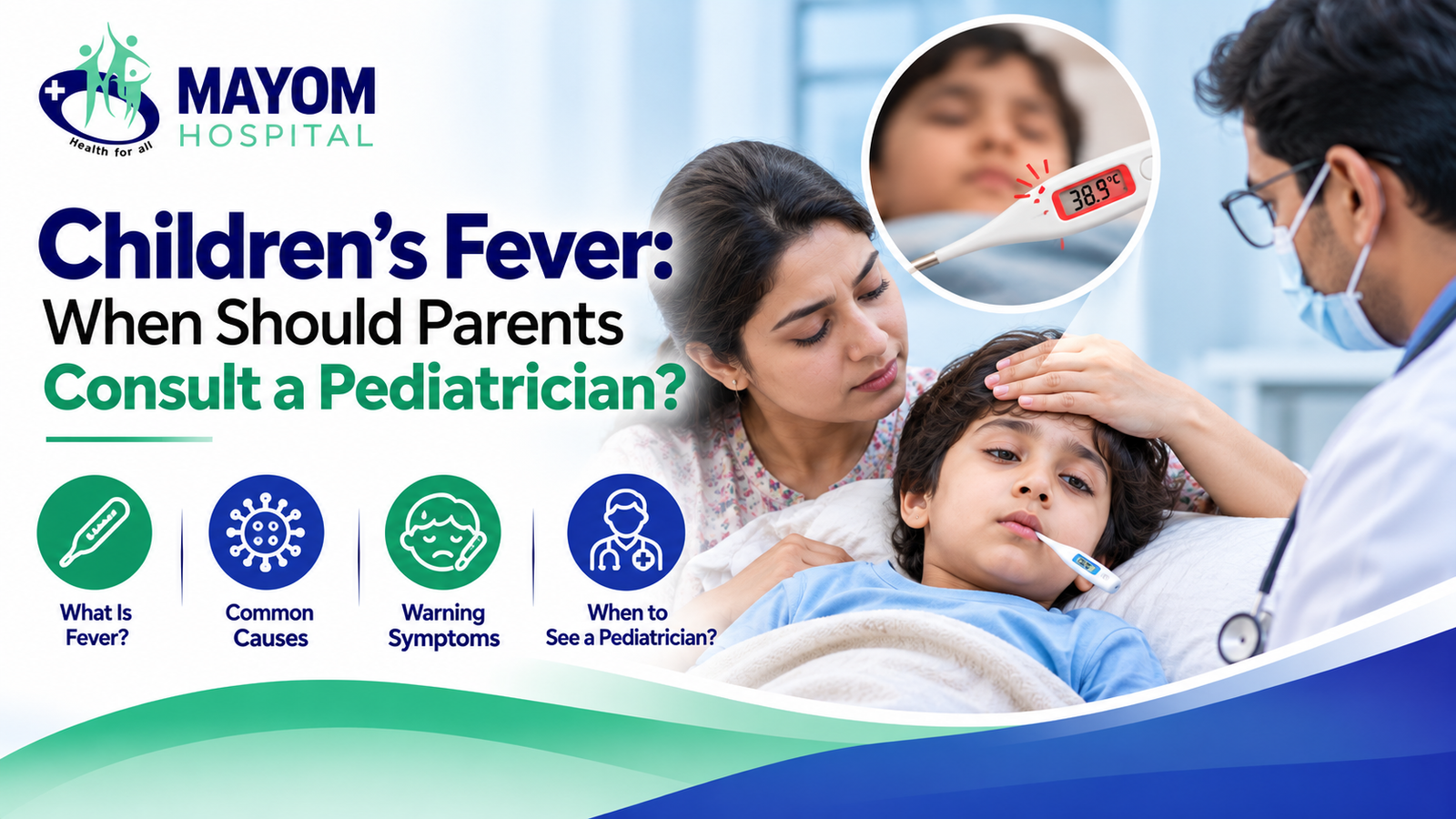
Children’s Fever: When Should Parents Consult a Pediatrician?
It is 11 at night, your child feels hot, and the thermometer says 38.9°C. Do you wait until morning, give medicine, or rush to the hospital? Almost every parent has been here.
Here is the reassuring part first: fever is a sign that the body is fighting an infection, not an illness by itself. Most fevers in children are caused by common viral infections and settle with rest and fluids. But some fevers need a doctor quickly, and the number on the thermometer is not always what matters most. This guide explains what to watch for, what to do at home, and when to call a pediatrician.
What Counts as a Fever in a Child?
A temperature of 38°C (100.4°F) or higher is generally considered a fever. A reading of 37.5°C may be normal for your child at certain times of the day, especially after play, a hot bath, or heavy clothing.
How to take your child’s temperature
- Use a digital thermometer. Avoid mercury thermometers, which can break and release mercury.
- Underarm readings are convenient but can read a little lower than the true body temperature.
- Ear thermometers are usually used for babies older than 6 months, and forehead scanners can vary, so repeat the reading if you are unsure.
- For babies under 3 months, doctors often prefer a rectal reading. Ask your pediatrician or nurse to show you how if you need to do it.
- Don’t rely on touch alone. A child can feel hot without a fever, and a fever can be missed.
Don’t Look Only at the Number
A very high temperature does not always mean a serious illness, and a lower temperature can still mean a sick child. How your child looks and behaves tells you more:
- Reassuring signs: The child is alert, plays or smiles when the fever comes down, drinks fluids, and passes urine normally.
- Worrying signs: The child is unusually drowsy, floppy, hard to wake, very irritable, or not interested in anything, even when the fever is down.
When to See a Pediatrician: Quick Guide
Go to the emergency department right away if:
- Your baby is younger than 3 months and has a temperature of 38°C or above. Do not wait, and call or go to the hospital first, day or night.
- Your child has difficulty breathing: breathing much faster than usual, the chest pulling in, grunting, flaring nostrils, or bluish lips
- Your child has a seizure (fit), especially a first one, or one lasting more than 5 minutes
- There is a stiff neck, severe headache, or discomfort from bright light
- A rash that does not fade when you press a clear glass on it (see below)
- Your child is very drowsy, floppy, confused, or inconsolable
- Your child looks pale, mottled, or has cold hands and feet despite a high fever
- Repeated vomiting, green vomit, or the child cannot keep fluids down
- Signs of dehydration: no urine for 8 hours or more, very dry mouth, no tears when crying, sunken eyes, or a sunken soft spot on a baby’s head
- Severe pain in the belly, or a swollen painful joint or limping
- A temperature of 40°C (104°F) or higher
See a pediatrician the same day if:
- Your baby is 3 to 6 months old with any fever of 38°C or above
- Fever has lasted more than 24 hours in a child under 2 years, or more than 3 days in an older child
- The fever goes away and comes back
- Your child has ear pain, a painful or swollen throat with difficulty swallowing, or a cough with fast breathing
- Burning or pain while passing urine, or foul-smelling urine
- A new rash appears
- Your child has a long-term illness (for example heart, kidney, or lung disease, diabetes, or a weak immune system) and now has a fever
- You are simply worried. Trust your instinct.
Home care is usually fine if:
Your child is older than 6 months, alert, drinking well, passing urine normally, and the fever is under 3 days and not getting worse.
Fever in Delhi NCR: Don’t Ignore Dengue and Other Seasonal Fevers
Fevers are more common in the months after the monsoon, and in Delhi NCR they can be dengue, malaria, or typhoid as well as ordinary viral fever. Winter smog and colder weather also bring more viral infections and chest infections.
See a doctor early, and ask about testing, if a fever comes with:
- Severe body or joint pain, or pain behind the eyes
- Persistent vomiting or severe belly pain
- A rash, bleeding from the nose or gums, or black stools
- Extreme tiredness, or a child who becomes more drowsy as the fever goes down
- Fever that lasts more than 2 to 3 days, especially after mosquito exposure
Use mosquito nets and repellents suitable for children, and avoid stagnant water around the home.
What Causes Fever in Children?
- Viral infections: colds, flu, throat infections, and many common viral fevers. These are the most frequent cause.
- Bacterial infections: throat, ear, chest, or urine infections
- Stomach infections: often with diarrhoea or vomiting
- Dengue, malaria, and typhoid, especially in the post-monsoon season
- Vaccination: a mild fever for a day or two is common
- Other causes: less common illnesses that a doctor will look for if the fever persists
Teething can make a baby irritable and slightly warm, but it does not usually cause a true fever of 38°C or above. If your teething baby has a fever, look for another cause.
What to Do at Home
Keep your child comfortable
- Offer plenty of fluids: breast milk or formula for babies, and water, ORS, or soups for older children. Small, frequent sips work well.
- Dress lightly. Avoid wrapping your child in thick blankets.
- Keep the room comfortable, not cold
- Let your child rest, and don’t force food
- Check on your child during sleep if you are worried
About fever medicine
- The goal of medicine is comfort, not bringing the temperature to normal. If your child is comfortable and drinking, medicine may not be needed.
- Paracetamol is the usual first choice for fever and discomfort in children. Another medicine such as ibuprofen is sometimes used in older babies and children, but only if your doctor agrees.
- The dose depends on your child’s weight, not just age. Follow the product label or your pediatrician’s prescription, and use the measuring device that comes with the medicine, not a kitchen spoon.
- Check that cold and flu syrups do not already contain paracetamol, so you don’t give it twice.
- Never give aspirin to a child.
- If dengue is possible, doctors usually avoid ibuprofen and other anti-inflammatory painkillers. Ask your doctor before giving any.
- For babies under 3 months, do not give any medicine before speaking to a doctor.
- Fever medicine does not prevent fever-related seizures.
Things to avoid
- Cold water, ice baths, or alcohol rubs. They make children shiver and can be harmful. Lukewarm sponging may help comfort, but it is not required.
- Leftover antibiotics or antibiotics without a prescription. Most fevers are viral, and antibiotics do not help them.
- Overdressing or closing every window
- Giving home remedies in place of medical care when warning signs are present
What Is a Febrile Seizure?
Some children between about 6 months and 5 years can have a seizure when their temperature rises quickly. It looks frightening, with stiffening or jerking, eyes rolling back, and loss of awareness, but most are brief and do not cause lasting harm.
If it happens:
- Stay calm and note the time.
- Lay your child on their side on a soft surface, away from sharp or hard objects.
- Loosen tight clothing.
- Do not put anything in the mouth, hold your child down, or give food, drink, or medicine during the seizure.
- Call for emergency help if it lasts more than 5 minutes, if your child does not wake up properly afterwards, has trouble breathing, or has repeated seizures.
Even if it stops quickly, have your child checked by a doctor after a first seizure.
What Will the Pediatrician Do?
The doctor will ask how long the fever has lasted, how your child is eating, drinking, and passing urine, and what other symptoms there are. After a physical examination, tests are advised only when they are needed, such as:
- Blood tests, including tests for dengue, malaria, or typhoid when indicated
- Urine tests
- A throat swab, or a chest X-ray if a chest infection is suspected
Mayom Hospital has pathology, microbiology, and X-ray services, so the common tests can be done within the hospital.
Preventing Fevers
- Keep your child’s vaccinations on schedule. Mayom offers vaccination and immunisation services.
- Teach handwashing, and keep sick children away from babies where possible
- Use safe drinking water and freshly cooked food
- Protect against mosquito bites
- Breastfeed infants where possible, and follow the doctor’s advice on nutrition and growth. See Pediatric Nutrition & Growth Monitoring.
Common Myths About Fever
| Myth | Fact |
|---|---|
| “Fever can damage the brain.” | Fevers from common infections do not usually damage the brain. The cause of the fever matters more than the number. |
| “Fever must be brought down immediately.” | The aim is comfort. A fever that is not bothering your child often does not need medicine. |
| “Cold water or ice will lower it faster.” | It makes children shiver and uncomfortable. |
| “Every fever needs antibiotics.” | Most fevers are viral, and antibiotics do not treat viruses. |
| “Teething causes high fever.” | It may cause mild irritability, but not a true fever. Look for another cause. |
| “If the fever goes down with medicine, the child is fine.” | Check how your child looks and acts. A child who stays unwell needs review. |
Pediatric Care at Mayom Hospital, Gurgaon
At Mayom Hospital, D-Block, South City 1, Gurgaon, the Pediatric department includes General Paediatrics, Pediatric Emergency Care, a PICU and NICU, and vaccination services. The hospital also has 24×7 emergency services.
You can consult Dr. Deepa Aggarwal, Pediatrician, for fever, infections, growth, vaccination, and routine child health.
Book an appointment: +91 9999469769
Address: Mayom Hospital, D-Block, South City 1, Gurgaon
Emergency (24×7): 0124-4212500
Pediatric OPD: Mon to Fri, 11:00 AM to 2:00 PM and 6:00 PM to 7:30 PM (Saturday timings vary, so please confirm before visiting)
Frequently Asked Questions (FAQs)
1. What temperature is considered a fever in children?
A temperature of 38°C (100.4°F) or higher is generally considered a fever. Readings vary with the method and the time of day.
2. When should I take my child to the doctor for a fever?
Go to the emergency department right away for any baby under 3 months with a fever, or if your child has breathing difficulty, a seizure, a stiff neck, a non-fading rash, extreme drowsiness, or signs of dehydration. See a pediatrician the same day if the fever lasts more than 24 hours in a child under 2 years or more than 3 days in an older child, or if it keeps returning.
3. How high a fever is dangerous?
The number is not the only thing that matters. A temperature of 40°C (104°F) or above, or any fever with warning signs such as drowsiness, difficulty breathing, or repeated vomiting, needs urgent medical attention. In babies under 3 months, any fever is urgent.
4. Can I give paracetamol to my child for fever?
Paracetamol is commonly used to relieve discomfort in a child with fever. The dose depends on your child’s weight, so follow the product label or your pediatrician’s prescription. For babies under 3 months, speak to a doctor before giving any medicine.
5. Does my child need antibiotics for a fever?
Usually not. Most fevers in children are caused by viruses, and antibiotics do not treat them. A doctor will advise antibiotics only if a bacterial infection is found or strongly suspected.
6. What should I do if my child has a febrile seizure?
Stay calm, note the time, lay your child on their side on a soft surface, and don’t put anything in the mouth. Call for emergency help if it lasts more than 5 minutes, if your child does not recover properly, or if there is trouble breathing. Have your child checked by a doctor after a first seizure.
7. Is it safe to sponge my child with cold water to reduce fever?
No. Cold water or ice makes children shiver and uncomfortable. Lukewarm sponging may help comfort, but it isn’t necessary, and fluids, light clothing, and rest matter more.
8. Does teething cause fever?
Teething can make a baby irritable and slightly warm, but it does not usually cause a fever of 38°C or above. If your baby has a real fever, a doctor should look for another cause.
9. Is fever after vaccination normal?
A mild fever, fussiness, or soreness for a day or two after vaccination is common. Call your pediatrician if the fever is high, lasts more than 2 to 3 days, or your child seems very unwell. In babies under 3 months, always check with the doctor about any fever, even after a vaccine.
10. Which pediatrician should I see for my child’s fever in Gurgaon?
You can book a consultation with Dr. Deepa Aggarwal, Pediatrician, at Mayom Hospital, South City 1, Gurgaon, by calling +91 9999469769. For emergencies, call 0124-4212500 or go to the emergency department.
Final Thoughts
Most childhood fevers are short-lived and settle with fluids, rest, and watchful care. What matters is not only the number on the thermometer but how your child looks, behaves, drinks, and breathes, and how long the fever lasts. When you are unsure, especially with babies, it is always right to ask a doctor. You don’t need to wait for a fever to “prove” it is serious.
Disclaimer: This blog is for general information only and does not replace professional medical advice. If your child is unwell, please consult a qualified pediatrician or visit the nearest emergency department. Always follow your doctor’s instructions or the product label for any medicine.