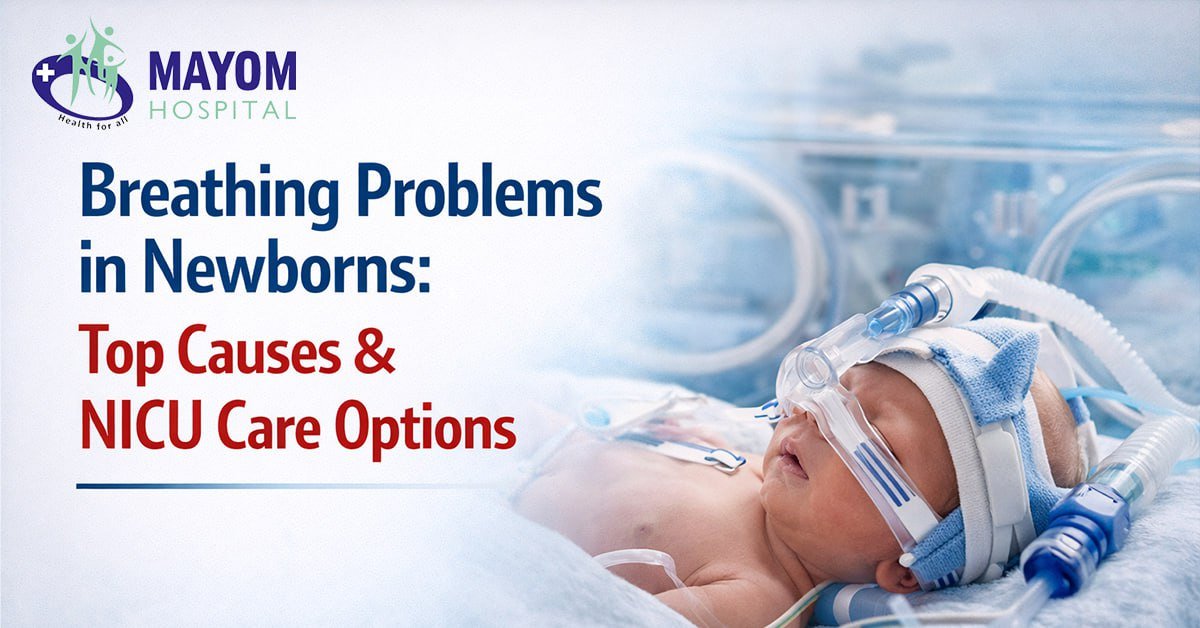
Breathing Problems in Newborns: Top Causes & NICU Care Options
A newborn’s first cry is more than just a sweet moment it’s proof that tiny lungs have begun their work. But what happens when a baby struggles to breathe properly after birth? For parents, it can feel frightening and confusing. Breathing difficulties in newborns are not uncommon, and the good news is that modern neonatal care can manage most of these situations effectively.
At Mayom Hospital, known as one of the Best Hospital in Gurgaon and widely trusted across the region, specialised neonatal teams work round the clock to help newborns breathe safely and grow stronger.
Why Do Newborns Sometimes Struggle to Breathe?
A baby’s lungs are still developing, even at the time of birth. The transition from the womb—where oxygen comes through the placenta—to breathing air can be tricky for some babies. And when things don’t go perfectly, breathing problems may appear.
Let’s look at the most common causes.
1. Respiratory Distress Syndrome (RDS)
This condition is more common in premature babies. Their lungs may not produce enough surfactant—a substance that helps keep air sacs open. Without it, breathing becomes difficult.
Babies with RDS often breathe rapidly, show chest retractions, or make soft grunting sounds. It sounds scary. Yet with timely treatment and NICU support, many babies recover well.
2. Transient Tachypnea of the Newborn (TTN)
A complicated name for something fairly temporary. TTN occurs when extra fluid remains in a baby’s lungs after birth. Instead of clearing quickly, the fluid lingers, causing fast breathing.
Most cases improve within a couple of days, especially under the observation of an experienced Neonatologist in Gurgaon.
3. Meconium Aspiration
Sometimes a baby passes stool (called meconium) before or during delivery and inhales it into the lungs. When that happens, breathing becomes laboured.
Immediate medical attention is essential here. Hospitals with advanced neonatal care units—like Mayom Hospital, recognised as a Best Hospital in Haryana—are equipped to handle such emergencies.
4. Infections
Newborn infections, including pneumonia or sepsis, can also cause breathing trouble. Symptoms may include poor feeding, lethargy, fever, or irregular breathing patterns.
Early diagnosis makes a huge difference.
How NICU Care Helps
When a newborn shows signs of breathing distress, doctors may recommend admission to the Neonatal Intensive Care Unit (NICU). This specialised environment allows constant monitoring and quick medical support.
Inside the NICU, several life-saving interventions may be used:
- Oxygen therapy to help the baby breathe comfortably
- CPAP (Continuous Positive Airway Pressure) to keep airways open
- Ventilator support in more serious cases
- Intravenous medications and fluids
- Temperature-controlled incubators
Tiny patients need gentle care—and precise technology.
This is where expertise matters. A skilled Neonatologist in Gurgaon carefully monitors oxygen levels, breathing patterns, and overall health to ensure the baby stabilises quickly.
Why Early Medical Attention Matters
Parents sometimes hesitate. “Maybe the baby just needs time,” they think.
Sometimes that’s true. Sometimes it’s not.
Warning signs you should never ignore include:
- Rapid breathing
- Bluish lips or skin
- Persistent grunting sounds
- Chest pulling inward during breaths
- Poor feeding or unusual sleepiness
When these signs appear, medical evaluation is essential.
A Place Parents Can Trust
Every newborn deserves a safe start. That’s why hospitals with strong neonatal infrastructure play such a crucial role.
Mayom Hospital, often regarded among the Best Hospital in Gurgaon and a trusted Best Hospital in Haryana, provides advanced NICU facilities supported by experienced neonatologists and paediatric specialists. From premature care to respiratory support, the focus remains simple: protect fragile lives and give them the strongest beginning possible.
Because sometimes, the smallest breaths matter the most.