
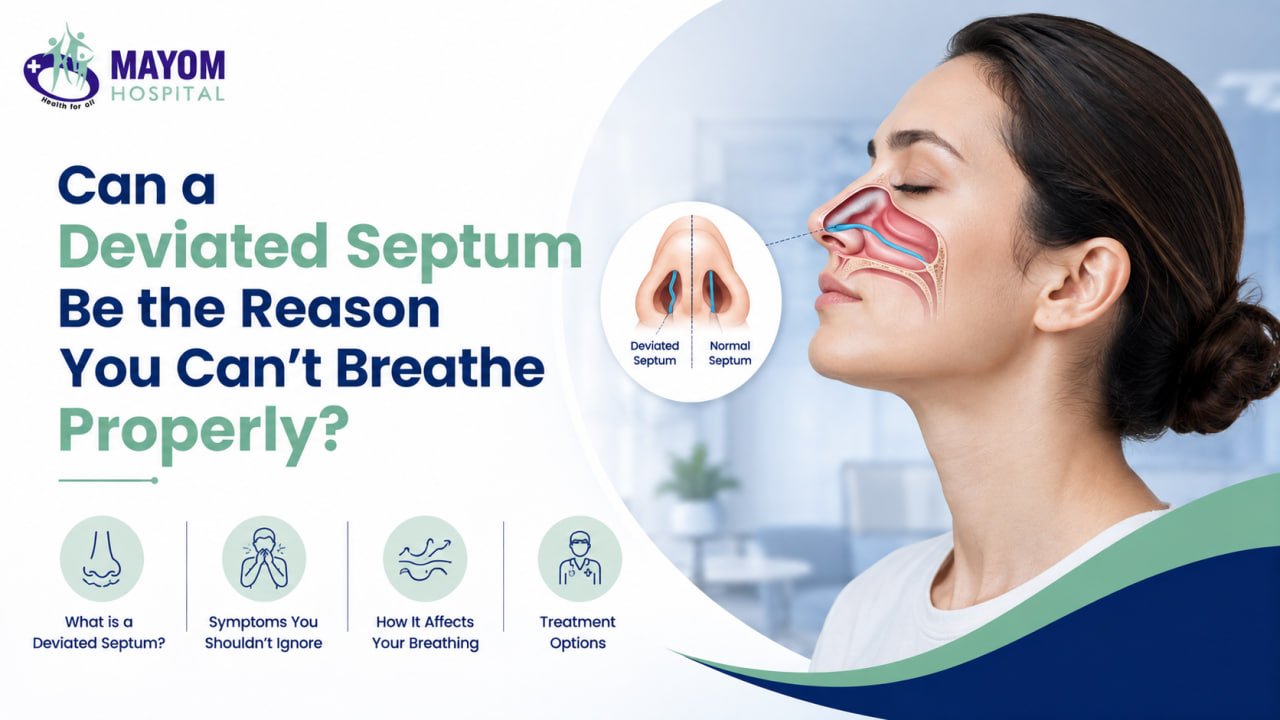
Can a Deviated Septum Be the Reason You Can't Breathe Properly?
You breathe through your nose all day. You probably never think about it.
Until you can't.
One nostril feels blocked. You wake up with a dry mouth. Running becomes harder than it should be, and at night, you may find yourself turning onto one particular side just to get enough air. Sometimes, the culprit isn't a cold or an allergy. It may be a deviated septum.
The septum is the wall of bone and cartilage separating the two sides of your nose. When it bends or shifts away from the centre, one nasal passage can become narrower, making normal airflow surprisingly difficult. Some people are born with this difference; others develop it after a nose injury, sports accident, or even an old bump they barely remember.
And here's the strange part: plenty of people have a deviated septum and never notice it.
The problem starts when it actually interferes with breathing.
What Does a Deviated Septum Feel Like?
The symptoms aren't always dramatic. In fact, they can creep into everyday life so quietly that you start treating them as "normal".
A blocked nostril that never seems to clear. Frequent nasal congestion. Nosebleeds. Noisy breathing while sleeping. Difficulty breathing during exercise.
Some people even develop the habit of sleeping on one side because breathing feels easier there. Others breathe through their mouth throughout the night and wake up feeling as if they've slept with the air conditioner blowing directly at their face.
A deviated septum can also become more troublesome when you have a cold or allergies because swelling inside the nose further reduces an already narrow passage.
So, is every blocked nose caused by a crooked septum?
Not a chance.
Allergies, enlarged turbinates, nasal polyps, sinus problems and other conditions can also interfere with airflow. That's why simply looking in the mirror and deciding that your nose is "crooked" isn't enough to diagnose the problem.
How Is a Deviated Septum Diagnosed?
An ENT specialist usually starts with your symptoms and a detailed examination of the nose. Depending on what they find, nasal endoscopy or imaging such as a CT scan may be recommended to understand what's happening deeper inside the nasal passages.
This matters because treatment should target the actual cause—not the symptom you happen to notice first.
If allergies are making the nasal tissues swell, medicines such as antihistamines or nasal steroid sprays may help control those symptoms. But medicines cannot physically straighten a crooked septum.
When Is Surgery Needed?
If a deviated septum is significantly affecting breathing, sleep, exercise, or everyday comfort despite appropriate medical management, your ENT specialist may discuss septoplasty.
Septoplasty is designed to straighten the internal nasal septum and improve airflow. The procedure generally works inside the nose, reshaping or repositioning the cartilage and bone that are causing the obstruction.
This is an important distinction.
Septoplasty is not the same as rhinoplasty.
Rhinoplasty primarily changes the external shape or structure of the nose. Septoplasty focuses on the internal septum and its function. In some patients, both procedures may be performed together when there is both a breathing problem and a need or desire to alter the external nasal structure.
What About Rhinoplasty?
People searching for the Best Rhinoplasty in Gurgaon sometimes assume rhinoplasty automatically fixes every breathing problem. It doesn't.
If the issue is a deviated septum, the surgical plan needs to address the internal obstruction. A Rhinoplasty Specialist in Gurgaon may recommend combining rhinoplasty with septoplasty when appropriate, particularly when external nasal structure also contributes to the breathing problem.
That decision should come after an individual examination—not a generic checklist from the internet.
Finding the Right Nose Specialist Matters
If you have struggled with nasal breathing for years, don't simply keep reaching for decongestant sprays and hoping tomorrow will be different. Persistent blockage deserves proper evaluation.
At Mayom Hospital, patients can consult ENT specialists for nasal obstruction, deviated septum, sinus problems and related breathing concerns. Depending on the diagnosis, treatment may involve medication, allergy management, nasal procedures or Nose Surgery in Gurgaon when surgery is genuinely warranted.
The goal isn't simply to operate.
The goal is to understand why you're struggling to breathe and choose the least invasive treatment that can actually solve the problem.
Breathe Normally Again
A deviated septum isn't automatically a medical emergency. Many people live with mild deviations without needing treatment. But when breathing becomes a daily battle, when sleep suffers, or when congestion keeps returning, it's worth finding out what's really happening inside your nose.
You shouldn't have to think about every breath.
Sometimes, the problem is allergies. Sometimes, it's sinus disease. And sometimes, that quiet wall inside your nose has simply moved too far to one side.
A proper ENT evaluation can tell the difference.