
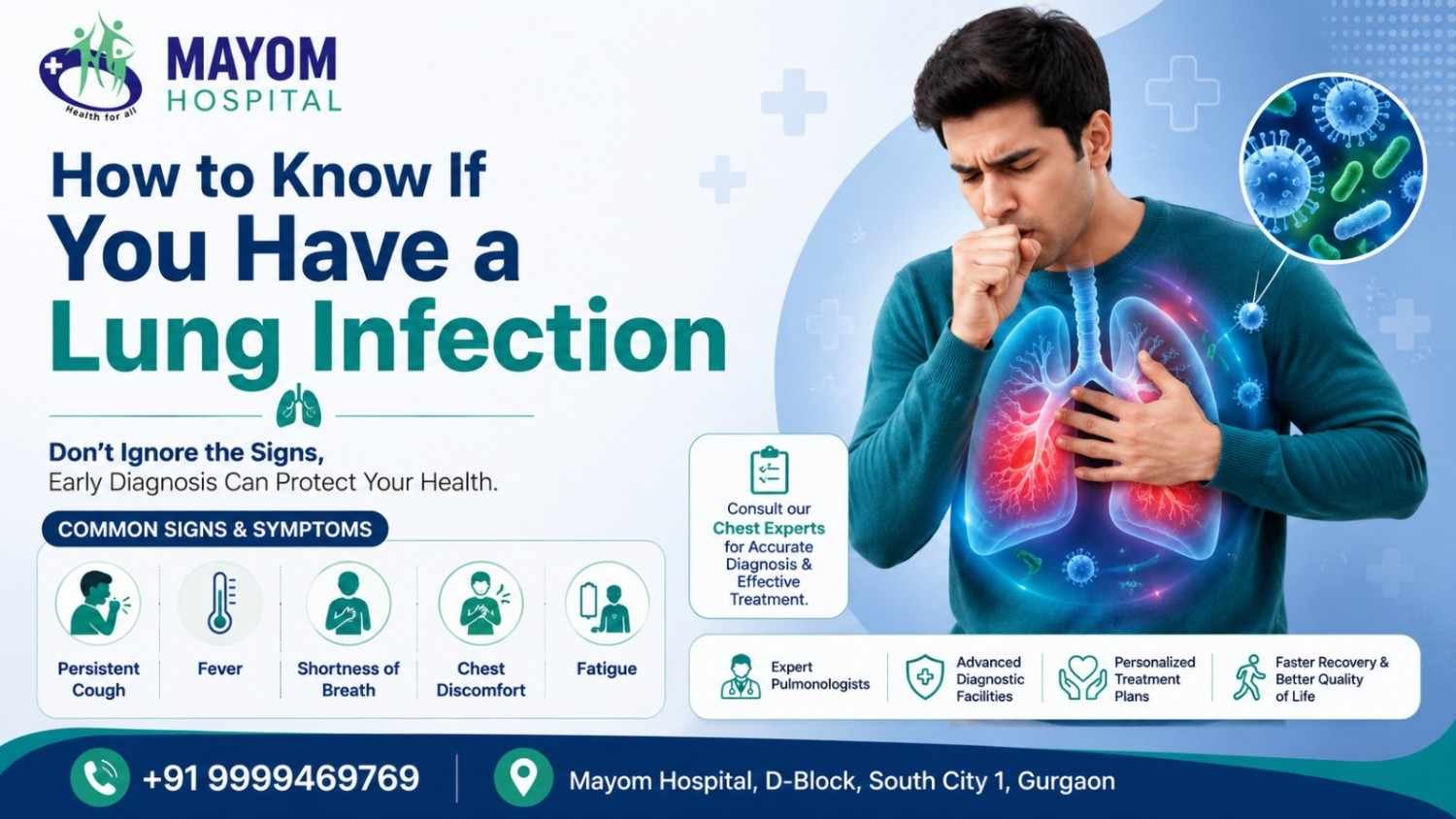
How to Know If You Have a Lung Infection
A cough isn't always "just a cough."
People say that all the time. Usually while reaching for another cup of tea, another lozenge, another excuse to avoid seeing a doctor.
Sometimes they're right.
Sometimes they're not.
And that's where things get tricky.
A lung infection rarely arrives with a dramatic announcement. It doesn't knock on the door and introduce itself. More often, it slips in quietly—first as a scratchy throat, then a stubborn cough, then that strange feeling that climbing one flight of stairs suddenly feels like climbing three.
You notice it. Then ignore it.
Bad idea.
Your lungs work around the clock without demanding much attention. Twenty thousand breaths a day, give or take. Most of us don't think about them until something feels off. Really off.
So, What Exactly Is a Lung Infection?
A lung infection occurs when bacteria, viruses, or fungi invade the lungs and trigger inflammation. Conditions like pneumonia, bronchitis, and certain respiratory infections fall into this category.
Sounds simple enough.
The symptoms, though? Not always.
One person develops a high fever and can't stop coughing. Another feels exhausted for days but never runs a temperature. Someone else experiences chest discomfort that feels suspiciously like a pulled muscle.
Human bodies don't read textbooks.
Which brings us to the real problem.
Many people miss the early warning signs.
The Symptoms You Shouldn't Ignore
Let's start with the obvious one.
Persistent Cough
A cough that hangs around for more than a couple of weeks deserves attention.
Not every lingering cough means infection, of course. Gurgaon winters alone can leave people coughing for days because of pollution, dry air, and changing temperatures.
But when the cough worsens instead of improving?
Pay attention.
Especially if mucus starts appearing. Yellow, green, rust-coloured, or blood-streaked phlegm can signal something deeper than a simple throat irritation.
Fever and Chills
This one's harder to dismiss.
If your body feels like it's alternating between a furnace and a freezer, your immune system may be fighting an infection.
You sweat.
You shiver.
You wrap yourself in blankets and somehow still feel cold.
Classic.
Breathlessness
This symptom often catches people off guard.
Imagine walking from your bedroom to the kitchen and feeling slightly winded. Or finding yourself pausing halfway through a conversation just to catch your breath.
That's not normal.
And it's certainly not something to "wait out" indefinitely.
Chest Pain
Not crushing heart-attack pain.
Something subtler.
A sharp discomfort when you take a deep breath. A tight sensation when you cough. A dull ache that seems to sit behind the ribs and refuses to leave.
The lungs themselves don't contain pain receptors, but the tissues surrounding them do—and they aren't shy about letting you know when something's wrong.
Extreme Fatigue
Not ordinary tiredness.
The kind where even small tasks feel oddly exhausting.
You sleep eight hours.
Then want another four.
Then maybe a nap after that.
Your body is burning energy to fight an infection, and it can leave you feeling completely drained.
Who Is Most at Risk?
Truthfully?
Anyone can develop a lung infection.
Still, some groups face a higher risk.
Older adults.
Young children.
People with asthma.
Smokers.
Individuals with diabetes or weakened immunity.
And then there's air quality.
Let's be honest. Breathing clean air consistently in urban environments isn't always easy. Constant exposure to dust, pollution, smoke, and allergens places extra stress on the respiratory system. Over time, that stress adds up.
When Should You See a Doctor?
Immediately?
No.
But don't wait forever either.
If symptoms persist beyond a few days, worsen rapidly, or include high fever, chest pain, severe breathlessness, or coughing up blood, medical evaluation becomes important.
Very important.
Because untreated lung infections can progress.
A mild infection can become pneumonia.
A manageable condition can turn into a hospital admission.
Not a chance worth taking.
How Is a Lung Infection Diagnosed?
Here's where experience matters.
A qualified Pulmonologist in Gurgaon doesn't rely on guesswork. Diagnosis usually involves listening to the lungs, reviewing symptoms, checking oxygen levels, and sometimes ordering tests such as chest X-rays, CT scans, sputum analysis, or blood investigations.
Simple symptoms can occasionally reveal complex problems.
That's why professional assessment matters.
At Mayom Hospital, respiratory specialists focus on identifying the underlying cause rather than simply treating the cough itself. Because treating symptoms without understanding the source is a bit like repainting a wall while ignoring the leak behind it.
Looks better temporarily.
Doesn't solve much.
Treatment: What Actually Works?
Treatment depends on the cause.
Bacterial infections may require antibiotics.
Viral infections often need supportive care, hydration, rest, and symptom management.
More severe cases may require oxygen support, nebulisation, or hospital-based monitoring.
The good news?
Most lung infections respond very well when diagnosed early.
That's why seeking timely Lung Infection Treatment in Gurgaon can significantly reduce complications and speed up recovery.
At Mayom Hospital, patients receive comprehensive respiratory care tailored to their specific condition, whether it's acute bronchitis, pneumonia, recurrent respiratory infections, or chronic lung disease complications.
The Bottom Line
Your body whispers before it screams.
A lingering cough.
Unusual breathlessness.
Persistent fatigue.
Chest discomfort that wasn't there last week.
These signs matter.
Listen to them.
Most lung infections can be treated effectively when caught early. The challenge isn't always the treatment. It's recognising when something isn't quite right and acting before a minor problem becomes a major one.
If you're experiencing symptoms that don't seem to be improving, consulting a skilled Pulmonologist in Gurgaon at Mayom Hospital could be the step that helps you breathe easier, recover faster, and avoid unnecessary complications.
Because when it comes to your lungs, "I'll deal with it later" is rarely the best plan.