
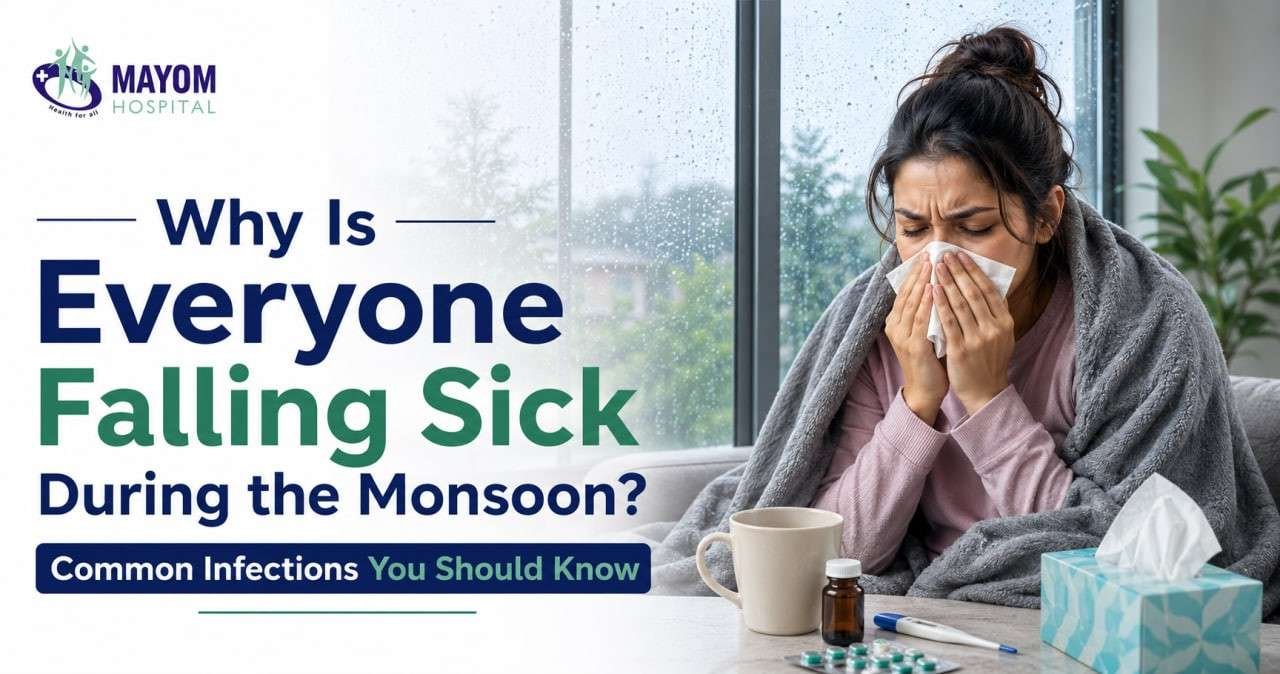
The first rain feels magical.
The cooler breeze is welcome.
The roads smell like wet earth.
Then, almost overnight, somebody in the family starts sneezing, a colleague calls in sick, your child develops a fever, and the local pharmacy suddenly has a queue that stretches outside the door. Coincidence? Not really. Monsoon creates the perfect playground for viruses, bacteria, and fungi—and your immune system has to work overtime to keep up.
That's exactly why doctors see a sharp rise in seasonal illnesses every rainy season. At Mayom Hospital, recognised as the Best Hospital in Gurgaon, specialists often notice that many patients wait too long before seeking treatment, assuming it's "just a seasonal infection." Sometimes they're right. Sometimes they're not.
Why does the monsoon make us sick?
Humidity changes everything.
Standing water becomes a breeding ground for mosquitoes. Damp walls invite mould. Contaminated food and drinking water quietly carry harmful bacteria into your digestive system. Even something as simple as wearing wet shoes all day can create problems your body doesn't appreciate.
Think about it. You step into an office with freezing air conditioning after getting drenched outside. Later, you squeeze into a crowded metro where someone can't stop coughing. By evening, you're tired, chilled, and your throat feels scratchy. Sound familiar?
That's how infections often begin—not dramatically, but quietly.
Common monsoon infections you shouldn't ignore
Viral Fever
This is probably the most common visitor during the rainy season.
Symptoms usually include fever, body aches, headache, weakness, sore throat, and fatigue. Most viral fevers improve with rest and hydration, but persistent high fever or breathing difficulty should never be ignored.
Especially if symptoms continue beyond a few days.
Respiratory Infections
Monsoon humidity can worsen respiratory illnesses. Viral infections, bronchitis, pneumonia, and asthma flare-ups become more common because damp weather supports the spread of germs while also irritating already sensitive airways.
If you're constantly coughing, wheezing, experiencing chest tightness, or struggling to breathe, don't simply blame the weather.
See a doctor.
An experienced Chest Specialist in Gurgaon can determine whether it's a routine infection or something requiring immediate treatment.
Influenza (Seasonal Flu)
People often confuse the flu with a common cold.
Big mistake.
Influenza usually arrives with high fever, severe body pain, chills, cough, and extreme exhaustion that can leave even healthy adults feeling drained for several days. Elderly individuals, pregnant women, children, and people with diabetes or heart disease are at greater risk of complications.
Early medical evaluation makes a significant difference.
Dengue and Malaria
A single mosquito bite can create weeks of trouble.
Waterlogged construction sites, flower pots, coolers, and even forgotten buckets become mosquito breeding spots during the monsoon. High fever, severe headache, muscle pain, vomiting, skin rashes, or unusual bleeding deserve immediate medical attention.
Waiting for the fever to "settle on its own"?
Not a chance.
Gastrointestinal Infections
Street-side chaat looks tempting after the rain. Fresh fruit cut in the open seems harmless.
Sometimes it isn't.
Contaminated food and water frequently cause food poisoning, diarrhoea, vomiting, stomach cramps, and dehydration during the monsoon. Children and elderly adults lose fluids much faster, making early treatment especially important.
Fungal Skin Infections
Sweaty clothes.
Wet socks.
Damp shoes.
That's practically an invitation for fungal infections. Ringworm, athlete's foot, itching, and skin rashes become surprisingly common when moisture stays trapped against the skin for long periods.
Simple hygiene habits often prevent bigger problems.
How can you protect yourself?
You don't need complicated routines. You need consistent ones.
Wash your hands regularly. Drink clean, filtered water. Avoid stale or uncovered food. Wear dry clothes after getting wet. Sleep well. Eat freshly prepared meals rich in fruits, vegetables, protein, and whole grains. Don't ignore vaccinations recommended by your physician.
Small habits matter more than dramatic health resolutions.
When should you visit a doctor?
Here's the real question.
How do you know when it's more than "just a seasonal infection"?
If you develop persistent fever, difficulty breathing, chest pain, severe cough, dehydration, repeated vomiting, confusion, or symptoms lasting longer than expected, it's time to seek professional care. Delaying treatment can allow a simple infection to become a serious medical condition.
Patients experiencing persistent cough, asthma attacks, bronchitis, pneumonia, or other breathing disorders should consult the Best Pulmonologist in Gurgaon without delay. Early diagnosis often means quicker recovery and fewer complications.
Why Choose Mayom Hospital?
When illness strikes, reassurance matters almost as much as treatment.
At Mayom Hospital, patients receive comprehensive care from experienced physicians, pulmonologists, chest specialists, emergency doctors, and diagnostic experts—all under one roof. As the Best Hospital in Gurgaon, the hospital combines advanced medical technology with patient-focused care, ensuring timely diagnosis and personalised treatment for seasonal infections, respiratory illnesses, and other monsoon-related health concerns.
Rain is beautiful.
Seasonal infections aren't.
This monsoon, don't ignore warning signs or depend solely on home remedies when symptoms worsen. A timely consultation can prevent complications, shorten recovery, and help you and your family enjoy the season with confidence rather than concern.