
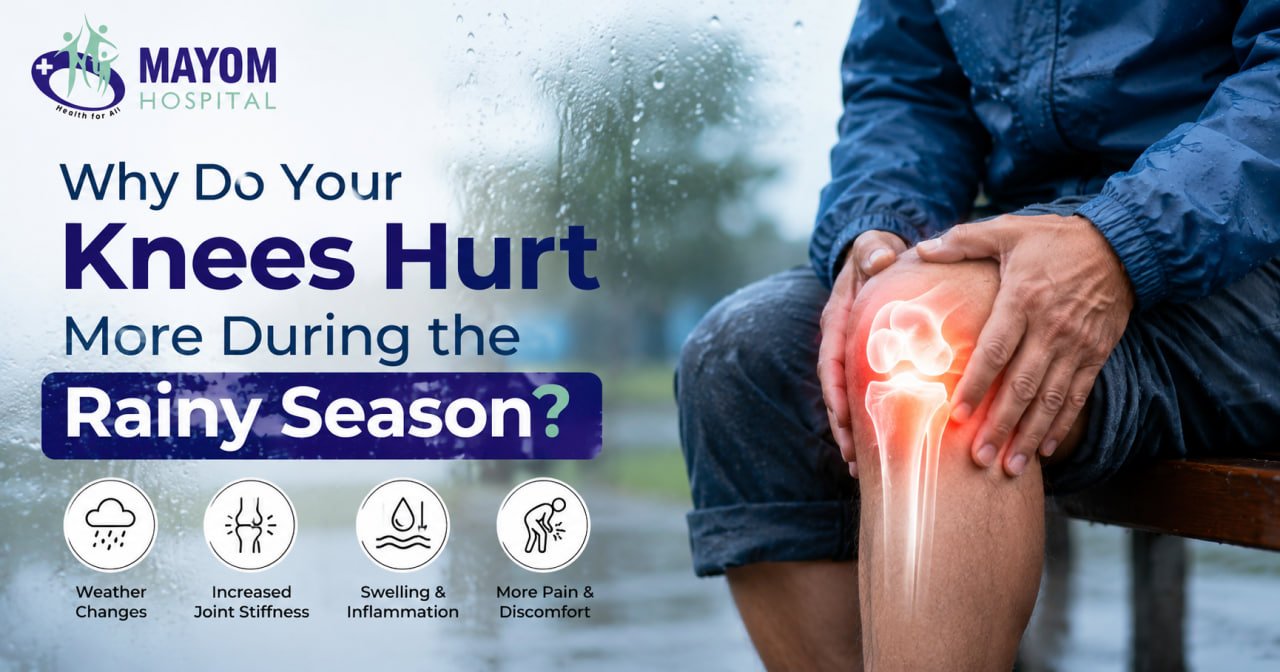
The clouds roll in. The air turns damp. Then your knees begin complaining before the first raindrop even hits the ground.
Coincidence?
Not really.
If you've ever found yourself rubbing your knees during the monsoon and wondering why the pain suddenly feels worse, you're not imagining it. Plenty of people notice increased stiffness, aching joints, or discomfort when the weather changes. While rain doesn't directly damage your knees, it can make existing joint problems far more noticeable.
At Mayom Hospital, patients often ask the same question every monsoon: "Why does my knee hurt more when it rains?" The answer isn't as mysterious as it sounds.
Does Rain Really Make Knee Pain Worse?
Look, the rain itself isn't attacking your joints. But the weather around it can affect how your body feels.
One of the biggest reasons is the drop in atmospheric pressure before and during rainfall. When air pressure decreases, tissues surrounding the joints may expand ever so slightly. That tiny change can increase pressure inside joints that are already inflamed or worn down—particularly in people with arthritis or old injuries—and suddenly climbing a flight of stairs feels like carrying a suitcase full of bricks.
Small change. Big impact.
Scientists are still studying exactly how weather influences joint pain, but one thing keeps showing up in clinics every year: many patients genuinely experience more discomfort during damp, rainy weather.
Who Is More Likely to Feel It?
Not everyone notices seasonal knee pain. Some people breeze through the monsoon without any issues. Others start avoiding evening walks because every step reminds them of an old injury.
You may be more likely to experience rainy-season knee pain if you have:
- Osteoarthritis
- Rheumatoid arthritis
- Previous ligament injuries
- Old bone fractures
- Cartilage damage
- Excess body weight
- Weak thigh muscles
Think of your knee like an old wooden door. On dry days, it swings open with little effort. Add moisture, swelling, and years of wear, and suddenly it creaks every single time someone pushes it.
Your joints aren't wooden doors, of course. But sometimes they behave surprisingly similarly.
It's Not Always Arthritis
Here's where people make a mistake.
Every knee ache gets blamed on "old age."
Not a chance.
Persistent knee pain could result from ligament injuries, tendon inflammation, cartilage wear, bursitis, or even a previous fracture that never healed perfectly. That's exactly why consulting a Bone Specialist in Gurgaon is important instead of relying on pain balms or random advice from neighbours who swear by mustard oil and hot towels.
Pain is a symptom.
Not a diagnosis.
Simple Ways to Reduce Knee Pain During Monsoon
The rainy season doesn't mean you have to stay indoors wrapped in a blanket all day. In fact, avoiding movement often makes stiffness worse.
Here are a few habits that actually help:
Keep Moving
Gentle walking, stretching, yoga, or physiotherapy keeps the knee joint lubricated. Even twenty minutes of controlled movement is often better than sitting for six hours straight.
Strengthen Supporting Muscles
Strong quadriceps and hamstrings reduce stress on your knees. A physiotherapist can recommend exercises that improve stability without putting extra pressure on the joint.
Maintain a Healthy Weight
Every extra kilogram places additional load on your knees. Multiply that by thousands of steps every day and it's easy to see why weight management matters.
Stay Warm
Cold, damp weather tightens muscles around the joints. Wearing supportive clothing or using a warm compress can ease stiffness after returning home from the rain.
Don't Ignore Persistent Pain
If swelling, redness, locking of the knee, or difficulty walking develops, home remedies aren't enough. Which brings us to the real problem.
Waiting.
People often wait months before seeking medical advice because the pain "comes and goes." Unfortunately, some joint conditions quietly worsen during that waiting period.
When Should You See an Orthopaedic Specialist?
You should consult a doctor if:
- Knee pain lasts more than two weeks
- Swelling keeps returning
- Walking becomes difficult
- The knee feels unstable
- You hear frequent clicking along with pain
- You cannot fully bend or straighten your knee
- Pain follows a fall or sports injury
Early diagnosis usually means simpler treatment—and often prevents surgery later.
Comprehensive Orthopaedic Care at Mayom Hospital
Whether it's chronic arthritis, ligament damage, sports injuries, or Bone Fracture Treatment in Gurgaon, Mayom Hospital offers comprehensive orthopaedic care under one roof. Patients benefit from advanced diagnostic facilities, personalised rehabilitation programmes, physiotherapy, and treatment plans designed according to their lifestyle and medical condition.
Recognised by many families as a Best Orthopaedic Hospital in Gurgaon, Mayom Hospital combines experienced orthopaedic surgeons, modern imaging technology, and patient-focused care to help people recover safely and return to everyday activities with confidence.
Don't Let the Weather Decide How You Live
Rain should remind you of fresh air and hot tea—not painful knees.
If your joints consistently ache every monsoon, treat that discomfort as your body's way of asking for attention rather than something you simply have to tolerate. The sooner you understand what's causing the pain, the easier it becomes to manage it.
Whether you need expert advice from a Bone Specialist in Gurgaon, rehabilitation after an injury, or specialised Bone Fracture Treatment in Gurgaon, the orthopaedic team at Mayom Hospital is committed to helping you move comfortably through every season—rain or shine.