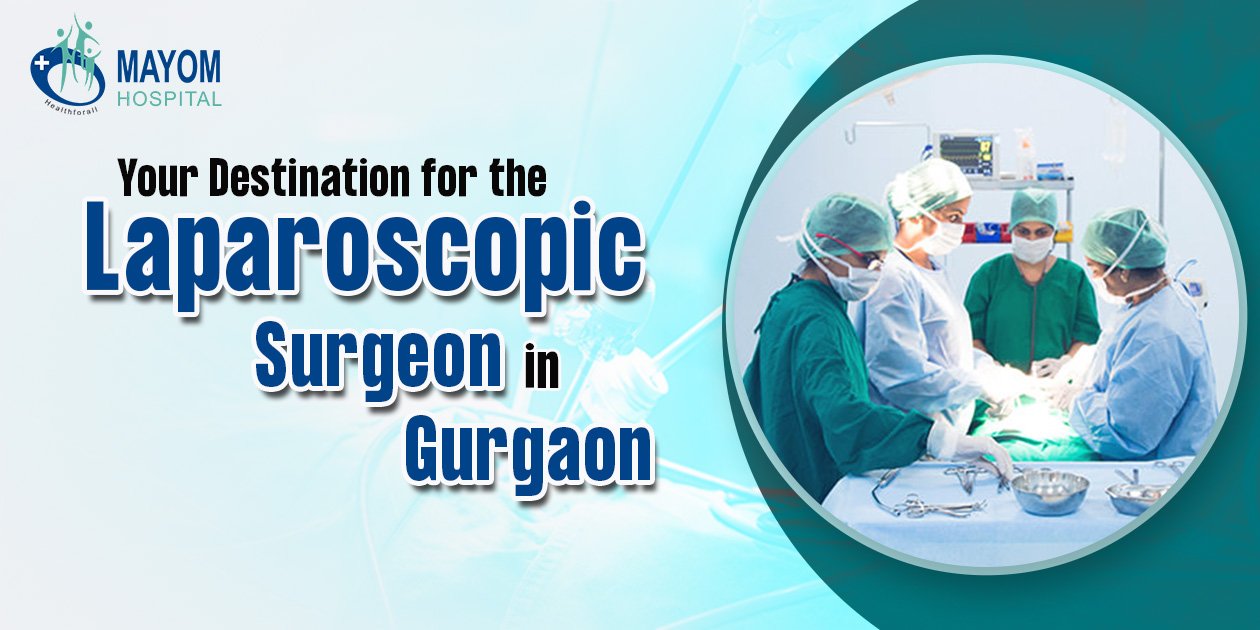
If you have been told you need surgery on your abdomen or pelvis, three questions usually come up first: how much pain will there be, how big will the scars be, and how soon can I get back to work? For many conditions, laparoscopic surgery (also called keyhole or minimally invasive surgery) answers all three better than traditional open surgery.
If you are searching for a laparoscopic surgeon in Gurgaon, this guide explains what the surgery involves, which conditions it treats, and what to expect at Mayom Hospital under Dr. Rajeev Seth.
What Is Laparoscopic Surgery?
In laparoscopic surgery, the surgeon makes a few small cuts, usually 0.5 to 1.5 cm, instead of one large incision. A thin tube with a camera (the laparoscope) shows the inside of your abdomen on a monitor, and fine instruments are passed through the other cuts to do the operation.
Because the muscles and tissues are disturbed far less, most patients have less pain, smaller scars and a quicker recovery than with open surgery. Not every patient or condition is suitable for it, so your surgeon decides after examining you and reviewing your reports.
Benefits of Laparoscopic Surgery
- Smaller scars: Tiny incisions usually heal into small, faint marks.
- Less pain: Less tissue damage generally means lower pain and fewer painkillers after surgery.
- Faster recovery: Many patients walk within hours and return to light routine work sooner than after open surgery.
- Shorter hospital stay: Depending on the procedure and your health, the stay may be a day or two, and some patients are discharged the same day.
- Lower wound infection risk: Smaller wounds are generally less exposed to infection.
Meet Dr. Rajeev Seth, Laparoscopic Surgeon at Mayom Hospital
Dr. Rajeev Seth leads laparoscopic surgery at Mayom Hospital, South City 1, Gurgaon. [ADD: qualifications, e.g. MBBS, MS, and fellowships], [ADD: years of experience], and [ADD: approximate number of laparoscopic procedures performed, only if the hospital can verify it].
His practice covers common gastrointestinal and abdominal procedures, with a focus on explaining the options clearly so patients and families can decide with confidence. [ADD: one line on his approach to patient counselling or any associations/memberships.]
You can view his full profile on our doctors page.
Conditions Treated with Laparoscopic Surgery at Mayom Hospital
- Gallbladder stones and gallbladder disease: Laparoscopic cholecystectomy, the standard operation to remove the gallbladder.
- Hernia: Repair of inguinal (groin) and ventral (abdominal wall) hernias using keyhole techniques.
- Appendicitis: Laparoscopic appendectomy to remove an inflamed appendix.
- Other digestive conditions: Certain cases of diverticulitis and Crohn's disease may be treated laparoscopically. Suitability depends on your condition and scans.
- Gynaecological conditions: Ovarian cysts, endometriosis and fibroids may be managed laparoscopically, usually with a gynaecologist.
- Urological conditions: Selected kidney, bladder and prostate procedures can be done laparoscopically, based on the specialist's assessment.
[CONFIRM WITH HOSPITAL: keep only the procedures Mayom actually performs. Add bariatric or colorectal surgery only if offered.]
For related digestive problems, see our Gastroenterology department.
Hernia Treatment at Mayom Hospital
A hernia occurs when an organ or tissue pushes through a weak spot in the abdominal wall, causing a bulge that often becomes more noticeable on standing, coughing or lifting. Hernias do not heal on their own, and surgery is the definitive treatment.
Laparoscopic hernia repair is done through small incisions, usually with a mesh to strengthen the weak area. Many patients find it less painful afterwards than open repair, and some return to light activity within a week or two. The best technique for you depends on the type, size and location of the hernia, which Dr. Seth will explain at your consultation.
Learn more on our laparoscopic and general surgery page.
What to Expect: Your Surgery Journey
- Consultation: Examination, history and review of your reports.
- Tests: Blood tests, ultrasound or other imaging as needed.
- Pre-surgery instructions: Fasting guidance and medicine adjustments.
- Surgery: Performed under anaesthesia, usually lasting one to a few hours depending on the procedure.
- Recovery and discharge: You are monitored, helped to walk early and given diet, wound-care and medicine instructions.
- Follow-up: A check-up to review healing and answer questions.
Why Choose Mayom Hospital for Laparoscopic Surgery?
- Experienced surgeon: Surgery planned and performed by Dr. Rajeev Seth.
- Clear counselling: You get a straight answer on whether laparoscopic or open surgery suits you, including the risks.
- Integrated care: Radiology, laboratory, anaesthesia and gastroenterology are available under one roof. [CONFIRM: ICU/OT facilities and empanelments to mention.]
- Insurance and cashless support: Check our empanelments page for accepted insurers and TPAs.
When Should You See a Surgeon?
Consult a doctor promptly if you have repeated upper abdominal pain after meals (possible gallstones), a bulge in the groin or abdomen, or pain in the lower right abdomen with fever or vomiting. Severe, sudden or worsening abdominal pain needs urgent medical attention: call Mayom Hospital emergency on 0124-4212500 or go to the nearest emergency department.
Book a consultation with Dr. Rajeev Seth: call +91 9999469769 or contact us online.
Frequently Asked Questions
1. Who is the best laparoscopic surgeon in Gurgaon?
The right surgeon for you depends on your condition, the surgeon's experience with that procedure, and how clearly they explain your options. At Mayom Hospital, laparoscopic surgery is led by Dr. Rajeev Seth. We suggest meeting the surgeon, asking about their experience with your specific procedure and then deciding.
2. What is the difference between laparoscopic and open surgery?
Open surgery uses one larger incision to reach the organ. Laparoscopic surgery uses several small incisions, a camera and fine instruments. It usually means less pain, smaller scars and quicker recovery, but open surgery is still the better choice in some cases.
3. Is laparoscopic surgery safe?
Laparoscopic surgery is widely used and generally safe, but like any operation it carries risks such as bleeding, infection, injury to nearby organs or reaction to anaesthesia. Your surgeon will discuss these risks and whether you are a suitable candidate before surgery. Occasionally the surgeon may need to switch to open surgery for safety.
4. How long does recovery take after laparoscopic surgery?
Recovery depends on the procedure and your health. Many patients return to light daily activities within one to two weeks after gallbladder or appendix surgery. After hernia repair, heavy lifting is usually restricted for several weeks. Your surgeon will give you a personalised timeline.
5. Can I go home on the same day after laparoscopic surgery?
Some patients can, but it depends on the procedure, your general health and how you recover from anaesthesia. Many stay one night or longer for monitoring.
6. Which conditions can be treated with laparoscopic surgery?
Common examples are gallbladder stones, hernias and appendicitis. Selected gynaecological, urological and digestive conditions can also be treated this way. Suitability is decided after examination and tests.
7. Will I have visible scars?
You will have a few small scars, typically less than 1.5 cm each, which usually fade over time. Scar appearance varies from person to person.
8. Does a hernia need surgery?
Hernias do not heal on their own. Surgery is the definitive treatment, and your surgeon may advise timing based on symptoms and risk of complications. A hernia that becomes painful, firm, discoloured or causes vomiting is an emergency.
9. Is laparoscopic surgery covered by health insurance?
Most health insurance policies cover medically necessary laparoscopic procedures, subject to the policy terms. Our team can help with pre-authorisation and cashless processing for empanelled insurers. Please check your policy and our empanelments page.
10. How do I book an appointment with Dr. Rajeev Seth?
Call +91 9999469769, use the Book an Appointment form on the website, or visit Mayom Hospital, D-Block, South City 1, Gurgaon.