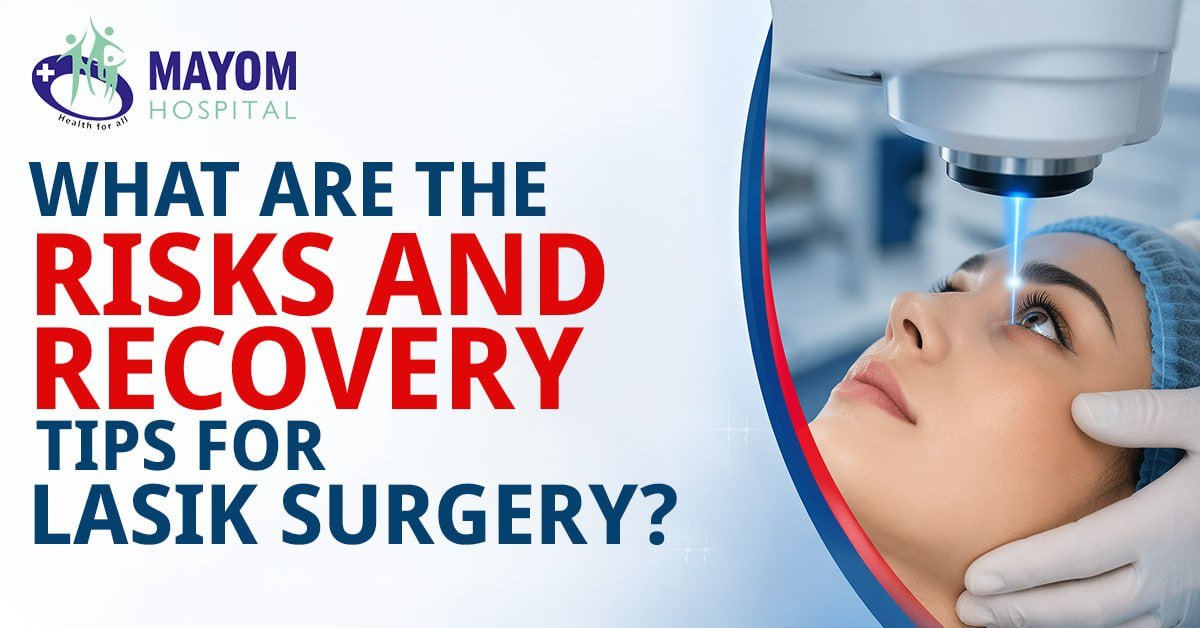
What Are the Risks and Recovery Tips for LASIK Surgery?
Thinking about ditching your glasses for good? You’re not alone. LASIK has become one of the most popular vision-correction procedures for people tired of foggy lenses, misplaced spectacles, and the eternal battle with contact lenses. But before booking the procedure, it’s worth asking the practical question—what are the risks, and how do you recover properly afterwards?
If you’re considering the Best LASIK Surgery in Gurgaon, understanding both sides of the process helps you make a smarter, calmer decision. At Mayom Hospital, patients receive expert evaluation, advanced technology, and personalised guidance from experienced eye specialists before and after surgery.
First, What Exactly Is LASIK?
LASIK (Laser-Assisted In Situ Keratomileusis) is a laser eye procedure that reshapes the cornea so light focuses properly on the retina. In plain English? It helps correct vision problems like:
- Nearsightedness (myopia)
- Farsightedness (hyperopia)
- Astigmatism
The procedure itself usually takes less than 20 minutes. Yes—less time than most people spend deciding what to watch on Netflix.
Common Risks of LASIK Surgery
LASIK is generally safe when performed by an experienced LASIK Eye Specialist in Gurgaon, but like any medical procedure, it comes with potential risks.
1. Dry Eyes
This is one of the most common side effects. Your eyes may feel gritty, irritated, or unusually dry for days or even weeks after surgery.
2. Temporary Glare or Halos
Some patients notice halos around lights at night, especially while driving. This often improves with healing.
3. Fluctuating Vision
Vision may be sharp one day and slightly blurry the next during early recovery. It’s frustrating—but normal.
4. Undercorrection or Overcorrection
Occasionally, the laser correction may not fully match the intended result, requiring enhancement treatment later.
5. Rare Complications
Infections, flap issues, or prolonged visual disturbances are uncommon but possible, which is why choosing the right centre for LASIK Eye Surgery in Gurgaon matters.
Recovery Tips After LASIK Surgery
Recovery is usually quick, but don’t mistake “quick” for “careless.” Your aftercare matters. A lot.
Protect Your Eyes Like They’re Precious
Because, frankly, they are. Wear the protective shields provided while sleeping for the first few nights to avoid rubbing your eyes.
Don’t Rub Your Eyes
Seriously. No matter how tempting. Rubbing can interfere with healing and affect results.
Use Your Eye Drops Religiously
Artificial tears and prescribed medicated drops help prevent dryness and infection. Skip them, and your eyes will remind you.
Avoid Screens for a While
Too much screen time right after LASIK can worsen dryness and strain. Your phone can survive without you for a few hours.
Stay Away from Dust, Water, and Makeup
For at least a week:
- No swimming
- No eye makeup
- No dusty environments if possible
Attend Follow-Up Appointments
Even if you feel fine. Healing isn’t just about what you can see—it’s about what your surgeon can detect.
Why Choosing the Right Specialist Matters
The difference between an average experience and an excellent one often comes down to who performs your surgery. At Mayom Hospital, patients benefit from advanced diagnostics, careful pre-surgery screening, and guidance from experienced specialists offering the Best LASIK Surgery in Gurgaon.
Not everyone is an ideal LASIK candidate, and a responsible surgeon will tell you that upfront.
Final Thoughts
LASIK can be life-changing. Waking up and seeing clearly without glasses? Hard to beat. But it’s still surgery—not magic. Knowing the risks, following recovery instructions, and choosing an experienced LASIK Eye Specialist in Gurgaon gives you the best chance at excellent results.
If you’re exploring LASIK Eye Surgery in Gurgaon, Mayom Hospital offers expert consultations, advanced eye care technology, and personalised treatment plans to help you see clearly—and recover confidently.