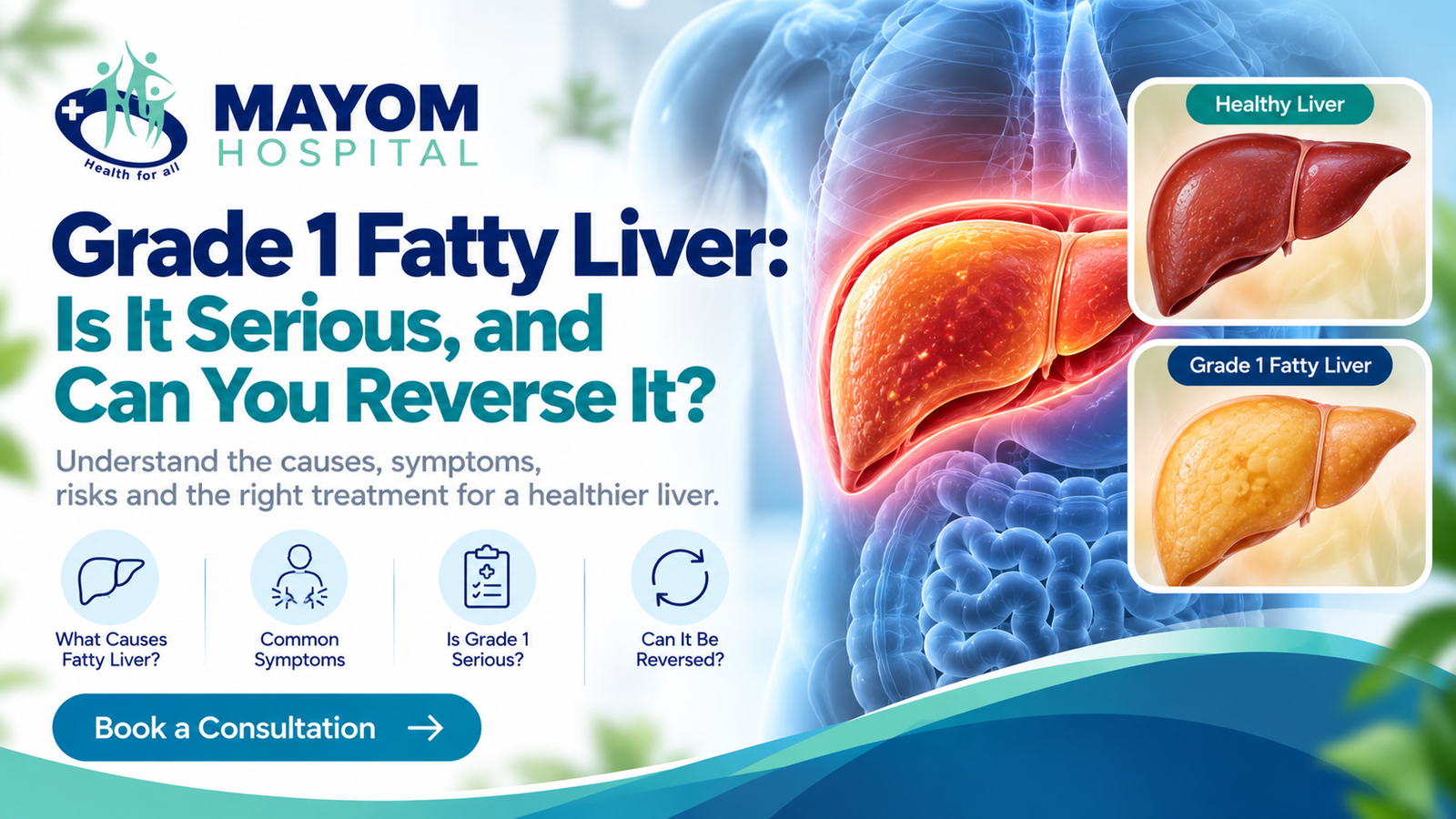
Grade 1 Fatty Liver: Is It Serious, and Can You Reverse It?
Grade 1 fatty liver is the mildest stage of fat build-up in the liver. For most people it is not dangerous on its own and is reversible, usually through weight loss, better food choices and regular exercise. But it is also a warning sign that your metabolism is under strain, and it raises your risk of diabetes and heart disease. The real question is not the "grade" but whether your liver has inflammation or scarring (fibrosis), and a simple blood-test score can help answer that.
Quick facts
- Seriousness: Usually mild, but needs attention.
- Symptoms: Typically none.
- Reversible? Yes, in most people.
- Core treatment: 5-10% weight loss, a diet low in sugar and refined carbs, 150+ minutes of exercise a week.
- Recheck: Blood tests in about 3 months, imaging or FibroScan in 6-12 months.
What does "Grade 1" actually mean?
Doctors use "grade" in two different ways, and this causes much confusion.
On ultrasound (the most common way you'll hear it), grade 1 means the liver looks slightly brighter than normal because of fat, but the blood vessel walls and the diaphragm are still clearly visible. Grades 2 and 3 mean progressively more fat, with blurred vessels and, in grade 3, poor visibility deeper into the liver. Ultrasound grading is somewhat subjective and usually only picks up fat once it crosses roughly 20-30% of the liver.
On biopsy (rarely needed), grade 1 steatosis means 5-33% of liver cells contain fat.
A name change you should know: In 2023, international liver societies renamed non-alcoholic fatty liver disease (NAFLD) as MASLD, short for metabolic dysfunction-associated steatotic liver disease. The new name reflects the real driver: weight, blood sugar, cholesterol and blood pressure problems. If your report says NAFLD, it is the same condition.
Is grade 1 fatty liver serious?
For most people, it progresses slowly, if at all. But "mild" does not mean "ignore it":
- A minority of people develop inflammation (MASH) and then scarring, usually over many years.
- Fatty liver is closely tied to type 2 diabetes, high blood pressure and heart disease. In people with MASLD, heart disease is a bigger threat to life than liver failure.
- It is a visible marker that insulin resistance may already be present.
The good news is that this stage is the best time to act, because the changes are the easiest to undo.
Symptoms: usually there are none
Most people find out by accident, when an ultrasound is done for another reason. Some report tiredness or a vague heaviness in the upper right abdomen, but these are nonspecific and have many other causes.
What fatty liver shows up as is test results, not symptoms:
| Finding | What it may mean |
|---|---|
| Raised ALT/AST | Liver inflammation (but these can be normal in fatty liver) |
| High triglycerides, low HDL | Fat-metabolism problem linked to fatty liver |
| High fasting sugar or HbA1c | Insulin resistance or diabetes |
| Larger waist | Visceral (abdominal) fat |
See a doctor promptly if you notice yellowing of the eyes or skin, swelling of the abdomen or legs, black stools, vomiting blood or confusion. These point to advanced liver disease, not grade 1 fatty liver, and need urgent care.
Causes and risk factors
Fatty liver happens when the liver takes in or makes more fat than it can use or export. Common drivers:
- Excess abdominal fat. South Asians can develop fatty liver at a lower BMI than other populations, so even a "normal weight" person with a big waist can have it.
- Diet high in sugar and refined carbohydrates: sweetened chai, cold drinks, packaged juices, mithai, bakery items, white rice and maida in large amounts, and frequent fried snacks.
- Insulin resistance, prediabetes and type 2 diabetes
- High triglycerides and high blood pressure
- Sedentary lifestyle and poor sleep, including sleep apnoea
- Other medical conditions: PCOS and an underactive thyroid
- Some medicines, such as long-term steroids, tamoxifen, methotrexate and amiodarone. Never stop a prescribed medicine on your own.
- Rapid, crash weight loss, which can temporarily worsen liver fat in some people
- Genetics: some people accumulate liver fat more easily
- Alcohol. MASLD is defined as fatty liver without heavy drinking, but alcohol adds to liver damage, so it matters even in small regular amounts.
How is it diagnosed?
- History and examination: diet, alcohol, medicines, family history, waist measurement.
- Blood tests: liver function (ALT, AST), lipid profile, fasting glucose or HbA1c, and a complete blood count (platelets).
- Rule out other causes: hepatitis B and C screening is important in India, as these can look similar.
- Ultrasound: the usual first test for fat.
- Fibrosis check (the most important step):
- FIB-4 score: calculated from age, AST, ALT and platelet count, with no extra test needed. Below about 1.3 suggests low risk of advanced scarring. Above about 2.67 suggests high risk and needs specialist evaluation. In between, a FibroScan is usually done. (Cut-offs are slightly different for people over 65.)
- FibroScan (transient elastography): a painless scan that measures liver stiffness (scarring) and fat (CAP) in minutes.
- Biopsy: rarely needed, only if the diagnosis is unclear or the risk is high.
How to reverse grade 1 fatty liver
There is no magic pill for grade 1. Lifestyle is the treatment, and it works.
1. Lose weight gradually
- Losing about 5% of body weight reduces liver fat, 7-10% improves liver inflammation, and 10% or more can even improve early scarring.
- Aim for 0.5-1 kg per week. Avoid crash diets.
- If you are lean, focus on reducing waist size, building muscle and improving diet quality rather than scale weight.
2. Fix your plate (Indian-style)
- Half the plate: vegetables and salad.
- A quarter: protein such as dal, sprouts, curd, paneer, eggs, fish, chicken or soya.
- A quarter: whole grains. Swap part of the white rice and maida for millets (ragi, jowar, bajra), oats, brown rice or whole-wheat roti.
| Eat more | Limit or avoid |
|---|---|
| Vegetables, salads, whole fruit | Sugary drinks, packaged juices, sweetened chai |
| Dal, legumes, sprouts | Sweets, mithai, bakery items |
| Nuts and seeds in small amounts | Deep-fried snacks, namkeen, packaged foods |
| Curd, buttermilk (unsweetened) | Refined flour (maida) products, large portions of white rice |
| Fish, eggs, lean protein | Excess ghee, butter and oil. Measure oil instead of pouring |
A few more points:
- Eat whole fruit rather than juice.
- Coffee: studies link 2-3 cups a day of unsweetened coffee with less liver scarring. The evidence is observational, so it is optional, not a prescription.
- Avoid "liver detox" products and herbal tonics unless your doctor approves. Some herbal supplements can themselves harm the liver.
3. Move more
- Aim for 150-300 minutes a week of moderate activity (brisk walking, cycling, swimming).
- Add strength training 2 days a week.
- Exercise reduces liver fat even if your weight does not change much.
4. Cut down alcohol
Best to avoid it, or keep it minimal. It is especially important if you have raised enzymes or any sign of scarring.
5. Treat the related conditions
- Keep blood sugar, cholesterol and blood pressure under control.
- Statins are safe in fatty liver and often needed for heart protection. Do not stop them out of fear.
- Sleep 7-8 hours and quit smoking.
6. Medicines
Most people with grade 1 need none. Newer drugs for MASH exist, but they are meant for people with confirmed inflammation and moderate scarring, and your hepatologist will decide if you are one of them.
How long does it take?
Many people see improvement in liver enzymes and fat within about 3-6 months of sustained change. A reasonable follow-up schedule:
- Weeks 1-4: cut sugary drinks, start daily walking, fix portion sizes.
- Month 3: repeat blood tests (liver enzymes, lipids, sugar).
- Month 6-12: repeat ultrasound or FibroScan.
Your doctor may adjust this based on your risk.
Common myths
- "No symptoms, so no problem." Fatty liver is silent by nature. Test results are the only way to know.
- "Only overweight people or drinkers get it." Lean people get it too, especially with abdominal fat and diabetes risk.
- "I need a completely fat-free diet." The problem is mostly sugar, refined carbs and excess calories, not healthy fats in sensible amounts.
- "Detox drinks will clean my liver." No such product has been shown to reverse fatty liver. Weight loss and exercise do.
- "It can't be reversed." Grade 1 usually can.
When should you see a specialist?
Consult a gastroenterologist or hepatologist if you have diabetes or prediabetes, are over 40, have raised liver enzymes, a high FIB-4 score, a family history of liver disease, or no improvement after 3-6 months of lifestyle change.
Frequently asked questions
Is grade 1 fatty liver curable?
In most people it can be reversed with sustained weight loss, diet change and exercise. It can return if old habits do.
Can grade 1 fatty liver go away completely?
Yes, many people see their scans return to normal with consistent lifestyle change.
Can thin people get fatty liver?
Yes. Abdominal fat, insulin resistance and diet matter more than the number on the scale.
Can children get fatty liver?
Yes, and it is becoming more common with obesity and junk-food habits. A paediatrician should evaluate it.
Does fatty liver cause liver cancer?
Rarely, and mostly after it has progressed to cirrhosis. This is why checking for scarring matters.
Is it okay to eat ghee, eggs or non-veg?
In sensible portions, generally yes. Focus on total calories, sugar and refined carbs first, and follow your doctor's or dietitian's advice for your case.
Do I need to take medicines?
Usually not at grade 1, apart from treating diabetes, cholesterol or blood pressure if present.
Key takeaways
- Grade 1 is mild, common and usually reversible.
- The real risk marker is fibrosis, so ask for a FIB-4 score or FibroScan.
- 5-10% weight loss, a low-sugar, high-fibre diet and regular exercise are the core treatment.
- Control diabetes, cholesterol and blood pressure, since heart health matters as much as liver health.
- Re-check in 3 months (bloods) and 6-12 months (imaging).
Worried about your liver report? Book a consultation with our Gastroenterology & Hepatology team for a FibroScan and personalised plan. [Book an appointment]
References (verify and link before publishing)
- Rinella ME et al., Multisociety Delphi consensus on fatty liver nomenclature (MASLD), 2023
- AASLD Practice Guidance on the clinical assessment and management of NAFLD, 2023
- EASL-EASD-EASO Clinical Practice Guidelines on MASLD, 2024
- ICMR-NIN Dietary Guidelines for Indians