
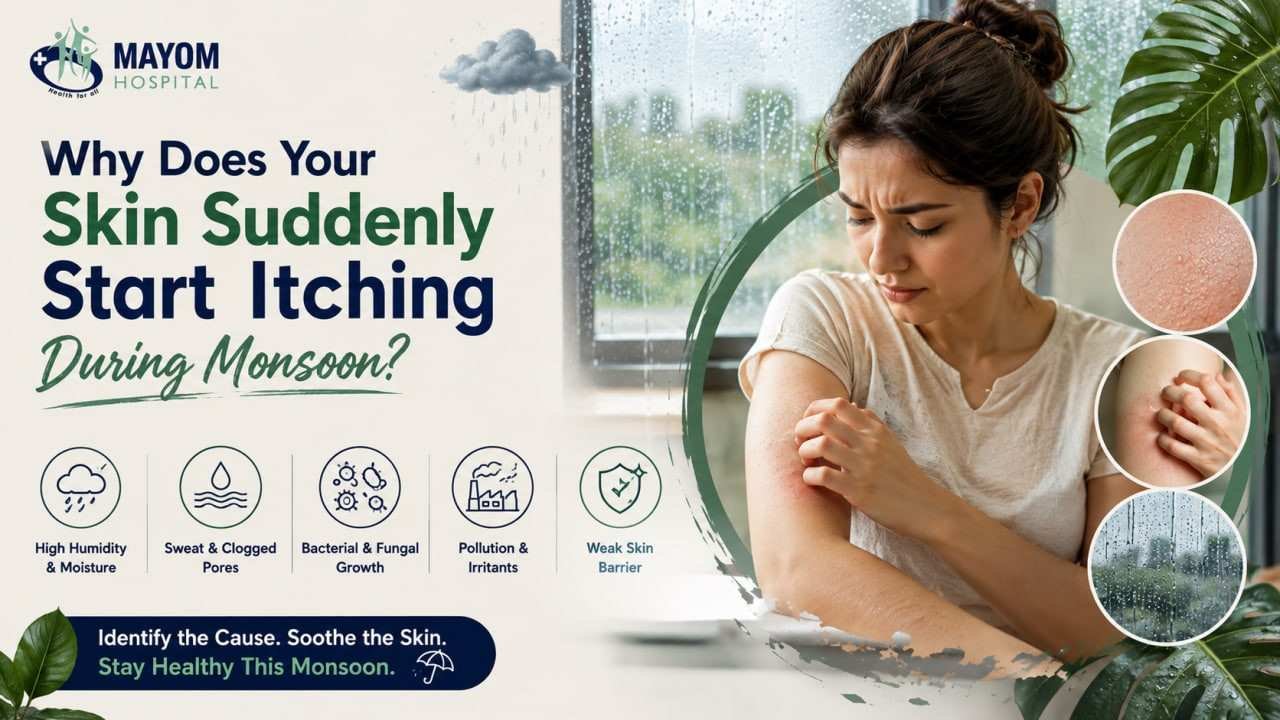
Why Does Your Skin Suddenly Start Itching During Monsoon?
The monsoon arrives with cooler evenings, damp clothes, wet roads—and, for some people, an itch that seems to appear out of nowhere.
Your arms itch. Your back feels irritated. Sometimes the skin around your waist or neck becomes red and uncomfortable. You scratch once. Then again. Five minutes later, you’re wondering what on earth happened.
Monsoon skin problems are common. And they aren't always caused by one thing.
Why Does Monsoon Weather Trigger Itching?
Humidity is the big culprit.
When moisture levels rise, your skin can struggle to regulate sweat and heat. Sweat sits on the skin for longer, mixes with oil and dead skin cells, and can clog pores. This creates an environment where irritation and certain skin conditions can flourish.
Then there’s the dampness.
Wet clothes, sweaty collars, shoes that don't dry properly, and towels left hanging in a humid bathroom can all become surprisingly good homes for fungi and bacteria. That's why itching between the toes, around the groin, under the arms, or beneath skin folds can become particularly annoying during the rainy season.
And yes, mosquitoes matter too.
Their bites can leave small, intensely itchy bumps, especially when you're spending more time indoors with windows closed.
Common Reasons Your Skin May Be Itching
1. Sweat Rash
Heat and humidity can block sweat glands, leading to tiny red bumps and a prickly sensation. Children often experience this, but adults aren't immune.
Keeping the skin cool and dry usually helps.
2. Fungal Infections
Ringworm and other fungal infections thrive in warm, moist environments. You might notice circular patches, scaling, redness, or persistent itching.
Ignoring them isn't a great strategy. Fungal infections can spread across the skin and become harder to manage.
3. Eczema Flare-Ups
People with eczema may notice worsening dryness, redness, and itching during seasonal changes. Sweat, dampness, detergents, and environmental allergens can all irritate sensitive skin.
4. Contact Dermatitis
That new raincoat. A different detergent. Wet footwear rubbing against your ankles.
Sometimes the trigger is sitting right against your skin.
Contact dermatitis can produce redness, itching, dryness, or small bumps exactly where the irritating substance touched you.
5. Insect Bites
Mosquitoes and other insects become more active around stagnant water and humid surroundings. Their bites can cause raised, itchy patches that may linger for several days.
What Can You Do at Home?
Start with the boring stuff. It works.
Keep your skin dry. Change out of damp clothes quickly. Wear loose, breathable cotton clothing, especially when you're sweating.
Take regular showers, but don't scrub your skin aggressively. A harsh soap can strip away the skin's protective barrier and leave you even itchier—which is rather counterproductive.
Moisturise after bathing if your skin feels dry.
Also, wash towels, bedsheets, and frequently worn clothes regularly. Make sure they dry completely before being used again.
And resist the urge to scratch.
Easier said than done, obviously. But scratching can break the skin, create tiny wounds, and increase the risk of secondary infection.
When Should You See a Dermatologist?
If itching lasts for several days, keeps returning, spreads quickly, or comes with significant redness, swelling, pain, pus, blisters, or fever, don't keep experimenting with home remedies.
The same goes for an itchy patch that refuses to heal.
A dermatologist can examine the affected area and determine whether you're dealing with an allergy, fungal infection, eczema, scabies, heat rash, or another condition. Treatment depends on the cause, so using random creams—especially steroid-containing combinations without medical advice—can sometimes make matters worse.
Why Choose Mayom Hospital for Skin Concerns?
For persistent monsoon-related skin problems, getting the right diagnosis matters more than simply finding the strongest cream.
Mayom Hospital, recognised as a Dermatology Hospital in Gurgaon, provides specialist evaluation for a wide range of skin conditions, including infections, allergic reactions, rashes, and recurring itching. Patients looking for a Best Dermatology Hospital in Gurgaon can benefit from professional assessment and treatment plans based on the actual cause of their symptoms.
Because itching is a symptom, not a diagnosis.
The monsoon doesn't have to mean months of scratching, covering up, and hoping the problem disappears. Keep your skin clean and dry, watch for warning signs, and seek dermatological care when the irritation refuses to settle.
Sometimes your skin isn't being dramatic.
It's trying to tell you something.