Deviated Septum: Symptoms, Diagnosis and Septoplasty
If one side of your nose always feels blocked, you sleep badly, you snore, or you keep getting sinus trouble, the cause may be a deviated septum. In everyday language, people call it a crooked nose bone (naak ki haddi tedhi hona). It is very common, and many people live with it without ever knowing.
The important question is not "do I have one?" but "is it causing me a problem?" This guide explains the symptoms, how an ENT doctor diagnoses it, when septoplasty is worth considering, and what recovery really looks like.
What Is a Deviated Septum?
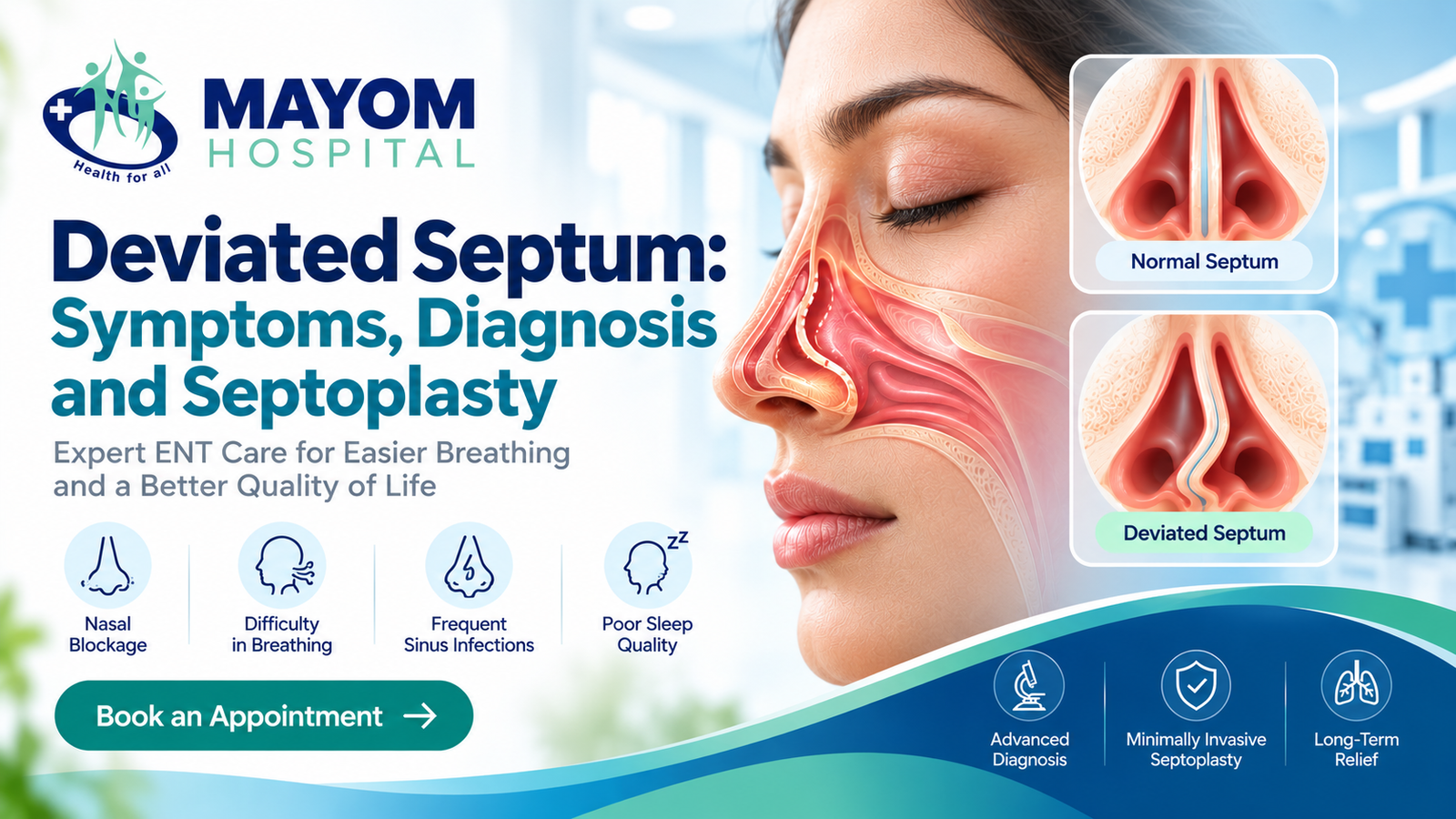
The nasal septum is the thin wall of bone and cartilage that divides the inside of your nose into two passages. In an ideal nose, it sits in the middle. When it is shifted to one side, one passage becomes narrower than the other, and that changes how air flows through your nose.
Most people have some degree of deviation, and most of it is minor. It becomes a medical problem only when it blocks breathing or leads to other symptoms.
What Causes a Deviated Septum?
- Present from birth: the septum grows unevenly, or the nose was under pressure before or during birth.
- Injury: a blow to the nose from a fall, a road accident, or sports, sometimes long forgotten.
- Growth and ageing: some deviations become more noticeable with time.
- Previous nose surgery.
Deviated Septum Symptoms
Symptoms usually come from the narrowed side, and they are often worse on one side than the other.
- Blocked nose, especially on one side
- Difficulty breathing through the nose, or mouth breathing
- Frequent nosebleeds, often from the dry, exposed side
- Snoring or noisy breathing during sleep
- Poor sleep and daytime tiredness
- Repeated sinus infections
- Facial pressure or headaches (these have many causes, so they need proper evaluation)
- Dry mouth and throat on waking
- Preferring to sleep on one particular side
Many people with a deviated septum have no symptoms at all, and they do not need treatment.
Gurgaon-specific note: Dust, construction, winter smog, and air conditioning can swell the nasal lining and dry it out. This can make a mild deviation feel much worse than it is, and it is one reason why symptoms often flare in winter.
Can a Deviated Septum Cause Other Problems?
When it is severe, it can contribute to:
- Chronic or repeated sinusitis, because the sinus drainage pathways get narrowed
- Disturbed sleep and snoring
- Recurrent nosebleeds
- Persistent nasal obstruction that affects exercise and daily comfort
A deviated septum is rarely dangerous. It is mostly a quality-of-life problem.
How Is a Deviated Septum Diagnosed?
Diagnosis is usually simple and done in the clinic.
- History: Your doctor asks about your symptoms, your sleep, nosebleeds, sinus infections, allergies, and any old nose injury.
- Nose examination: The doctor looks inside your nose with a light and a nasal speculum.
- Nasal endoscopy: A thin camera shows the whole septum and the rest of the nasal passages clearly. It is quick and done in the OPD. Read more about nasal endoscopy.
- Checking for other causes: Swollen turbinates, allergy, polyps, and sinus disease can cause the same symptoms. A good ENT looks for all of them, because treating only the septum may not fix your breathing.
- CT scan (only when needed): A CT scan is not required for every deviated septum. It is mainly used when sinus disease is suspected or when surgery is being planned.
Do You Need Treatment?
You may not need any treatment if:
- You have no symptoms, or only mild ones
- Your symptoms come mainly with colds or allergy flare-ups
Medicines can help with symptoms:
- Saline nasal rinses
- Steroid nasal sprays to reduce swelling
- Antihistamines when allergy is part of the problem
- Decongestant sprays only for a few days at a time, because longer use can cause rebound blockage
Medicines can make you more comfortable, but they cannot straighten the septum.
Septoplasty may be advised if:
- You still have significant blockage despite proper medical treatment
- You have repeated sinus infections linked to the deviation
- Nosebleeds keep coming back
- Your sleep and daily life are affected
- Surgery is needed to give access for other procedures
What Is Septoplasty?
Septoplasty is a surgery that straightens the nasal septum so air can flow freely through both sides of your nose. It is done from inside the nose, so there is no cut on the outside and no visible scar.
How the procedure is done
- Anaesthesia: Usually general anaesthesia, so you sleep through it. Local anaesthesia with sedation is sometimes possible.
- Access: The surgeon makes a small cut inside one nostril and lifts the thin lining covering the septum.
- Correction: The crooked parts of cartilage and bone are reshaped, repositioned, or partly removed, and the septum is brought back to the centre.
- Support: The lining is put back. Soft splints, packing, or dissolvable stitches hold the septum in place while it heals.
The surgery usually takes about one to two hours, and many patients go home the same day or after one night.
Septoplasty vs Rhinoplasty vs Sinus Surgery: What's the Difference?
| Septoplasty | Rhinoplasty | Septorhinoplasty | Turbinate reduction | Endoscopic sinus surgery (FESS) | |
|---|---|---|---|---|---|
| Purpose | Straighten the inner wall for breathing | Change the outer shape of the nose | Both function and shape | Reduce swollen turbinates | Open blocked sinus passages |
| Where | Inside the nose | Inside and outside | Inside and outside | Inside the nose | Inside the nose and sinuses |
| Changes appearance? | Usually not | Yes | Yes | No | No |
Many patients need more than one. For example, septoplasty is often done together with turbinate reduction, or with sinus surgery when the sinuses are also diseased. See our guides on rhinoplasty and endoscopic sinus surgery.
Septoplasty Recovery: What to Expect
Recovery is usually easier than people expect, but the first week can feel blocked.
| When | What to expect |
|---|---|
| Day 1 to 3 | Blocked nose, mild bloody or mucus discharge, pressure and tiredness |
| Around Day 5 to 7 | Splints or packing, if used, are usually removed at the follow-up. Breathing often improves noticeably after this |
| 1 to 2 weeks | Many people return to desk work. Some crusting inside the nose is normal |
| 2 to 3 weeks | Gradually resume exercise only when your surgeon allows it |
| Months | Swelling settles and the final result appears. Healing of the cartilage and bone continues for several months |
Your surgeon will give instructions for your case, because recovery depends on what was done.
Aftercare tips
- Use saline rinses as advised
- Do not blow your nose hard
- Sleep with your head raised
- Avoid heavy lifting and strenuous exercise until your surgeon says it is safe
- Avoid blood-thinning painkillers like aspirin unless your doctor approves
- Keep dust and smoke away, and wear a mask outdoors on high-pollution days
- Do not skip follow-up visits
Risks and Complications
Septoplasty is a commonly performed, generally safe procedure, but like any surgery it carries risks, including:
- Bleeding
- Infection
- Numbness of the upper teeth or the front of the nose, which is usually temporary
- A collection of blood under the lining (septal hematoma), which needs prompt treatment
- A small hole in the septum (perforation), which is uncommon
- Symptoms that persist or return
- Rarely, a change in the shape of the nose or in the sense of smell
Your surgeon should explain these before surgery, and you should ask which apply to you.
Is Septoplasty Right for Children?
Children's noses are still growing, so surgeons usually prefer to wait until the nose has finished growing, unless the blockage is severe. A child with persistent nasal blockage should first be assessed by an ENT, because adenoids and allergy are much more common causes.
Does Insurance Cover Septoplasty?
When septoplasty is needed to treat breathing problems, it is usually considered a medical procedure rather than a cosmetic one. Coverage depends on your policy and your insurer or TPA. Documents like your symptom history, nasal endoscopy findings, and scan reports help with approval. You can check Mayom Hospital's empanelments page, and ask the hospital's billing team before you plan surgery.
ENT Care at Mayom Hospital, Gurgaon
At Mayom Hospital, D-Block, South City 1, Gurgaon, the ENT & Head-Neck Surgery team follows a step-by-step approach:
- Examination and nasal endoscopy to see exactly what is going on
- CT scan on site when it is needed
- Checking for allergy, turbinate swelling, and sinus disease along with the septum
- Medical treatment first where it makes sense
- Septoplasty, with or without turbinate reduction or sinus surgery, when it is really needed
Consult Dr. Manish Prakash (ENT, Head & Neck Surgery) for an evaluation. See also our Sinus Surgery department, and read our guide on sinus surgery vs medication.
? Book an appointment: +91 9999469769
? Address: Mayom Hospital, D-Block, South City 1, Gurgaon
? Emergency (24×7): 0124-4212500
When Should You See an ENT Doctor?
- One-sided or constant nasal blockage for more than a few weeks
- Frequent nosebleeds
- Repeated sinus infections
- Loud snoring with tiredness in the daytime
- Blocked nose after a nose injury that has not improved
Get urgent care after a nose injury if you have heavy bleeding, difficulty breathing, a visible change in the shape of the nose, or a bulging swelling inside the nose.
Frequently Asked Questions (FAQs)
1. Can a deviated septum be fixed without surgery?
Medicines such as saline rinses, steroid sprays, and antihistamines can reduce swelling and ease symptoms, but they cannot straighten the septum. If symptoms continue despite proper treatment, septoplasty is the way to correct the structure.
2. Is a deviated septum serious?
Usually not. Many people have a mild deviation with no symptoms and need no treatment. It matters when it blocks breathing, causes nosebleeds, or contributes to repeated sinus infections and poor sleep.
3. How is a deviated septum diagnosed?
An ENT doctor asks about your symptoms and any past nose injury, then examines the inside of your nose with a light and speculum, often with a nasal endoscopy. They also check the turbinates, allergy, and sinus involvement.
4. Do I need a CT scan for a deviated septum?
Not always. A CT scan is mainly used when sinus disease is suspected or when surgery is being planned.
5. Is septoplasty painful?
It is done under anaesthesia, so you do not feel pain during surgery. Afterwards, most people have a blocked feeling and mild to moderate discomfort, which can be managed with medicines prescribed by your doctor.
6. How long does septoplasty recovery take?
Splints, if used, usually come out at about one week. Most people return to desk work in one to two weeks and avoid heavy exercise for a few weeks. Swelling and healing continue for several months.
7. Will my nose look different after septoplasty?
Septoplasty works inside the nose, so it usually does not change how your nose looks from outside. If you also want a change in shape, rhinoplasty can be combined with it (septorhinoplasty), and you should discuss this with your surgeon beforehand.
8. What is the difference between septoplasty and rhinoplasty?
Septoplasty straightens the inner wall of the nose to improve breathing. Rhinoplasty reshapes the outer nose. Some patients need both.
9. Can a deviated septum cause sinus infections and headaches?
It can narrow the sinus drainage pathways and contribute to repeated sinus infections in some people. Headaches have many causes, so they need a proper ENT evaluation before they are blamed on the septum.
10. How much does septoplasty cost in Gurgaon?
The cost depends on the extent of surgery, whether it is combined with other procedures, the room category, and your insurance or TPA. After an examination and endoscopy, the hospital can give you a clear estimate.
11. Can a deviated septum come back after surgery?
Most patients get lasting improvement. Rarely, symptoms can return because of healing changes, new injury, or other causes such as allergy and swollen turbinates, which may keep you blocked even after the septum is straight.
12. Which doctor should I see for a deviated septum in Gurgaon?
An ENT specialist (otolaryngologist). At Mayom Hospital, you can book a consultation with Dr. Manish Prakash.
Final Thoughts
A deviated septum is common, and most people do not need surgery. But if you have a blocked nose, snoring, nosebleeds, or sinus infections that keep coming back, it is worth getting examined properly. Sometimes the septum is the main cause, and sometimes it is allergy or swollen turbinates. An ENT examination tells you which, and whether septoplasty is likely to help.