
A blocked nose, facial pressure, thick mucus: if this has gone on for months, you are probably wondering whether endoscopic sinus surgery in Gurgaon is the answer. In a city where dust and pollution never really go away, chronic sinusitis is far more common than most people think, and medicines alone often stop working after a while.
You have tried steam, nasal sprays, and a couple of antibiotic courses. Each time you feel better for a week or two, and then it all comes back. This guide explains, in plain language, when surgery is actually needed, what happens during the procedure, and what recovery looks like.
What Is Chronic Sinusitis?

Your sinuses are small air-filled spaces around your nose, cheeks, eyes, and forehead. When their lining stays swollen and inflamed for 12 weeks or more, it is called chronic sinusitis.
Common signs include:
- A blocked or stuffy nose that does not clear
- Thick yellow or green discharge
- Pressure or pain around the cheeks, eyes, or forehead
- Postnasal drip and frequent throat clearing
- A reduced sense of smell or taste
- Bad breath and a cough that gets worse at night
- Headaches that feel heavier when you bend forward
Pollution is a big trigger. If you live or work in Gurgaon, you breathe NCR air every day, and winter smog often makes chronic sinusitis worse. You can read more in our guide on chronic sinusitis diagnosis and treatment.
What Is Endoscopic Sinus Surgery?

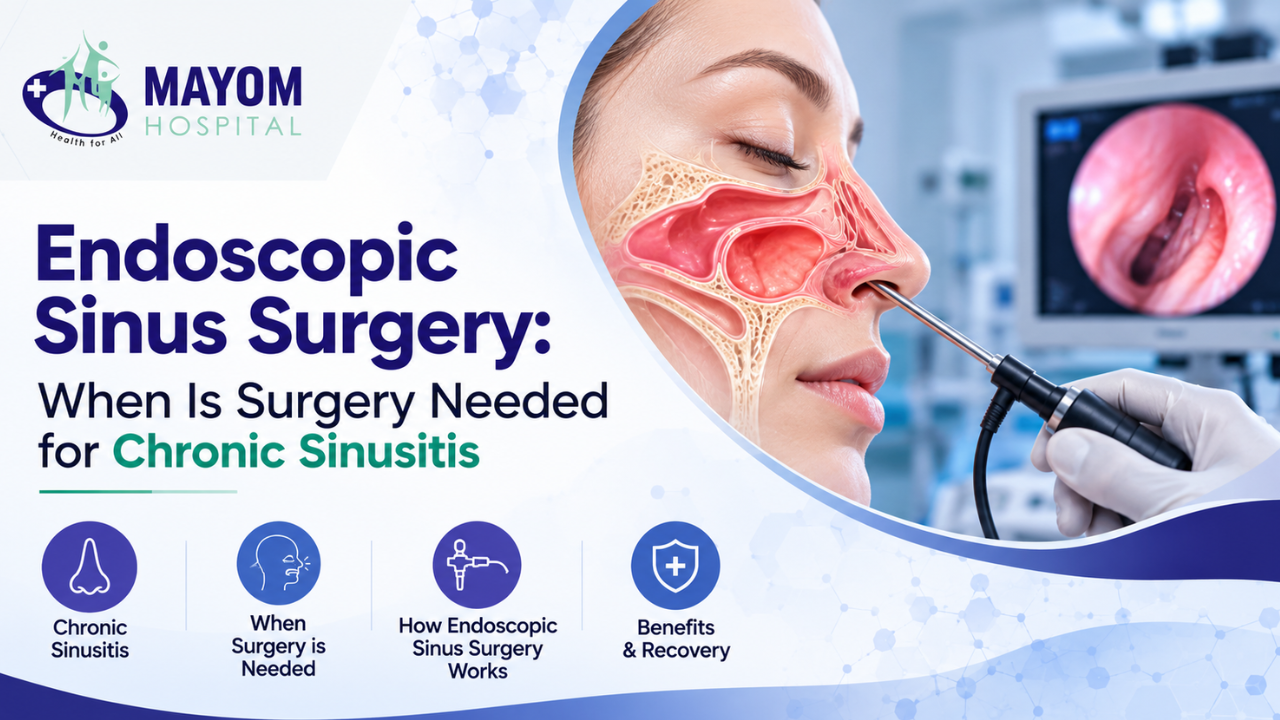
Endoscopic sinus surgery, also called FESS (Functional Endoscopic Sinus Surgery), is a minimally invasive procedure. The surgeon passes a thin, lighted tube with a tiny camera, called an endoscope, through your nostrils to see inside your nose and sinuses clearly.
There is no cut on your face and no visible scar. Using fine instruments, the surgeon removes swollen tissue, polyps, or thick mucus and widens the natural drainage openings, so air and mucus can move freely again.
When Is Surgery Needed for Chronic Sinusitis?

Most people with sinusitis do not need an operation. Doctors start with medicines. Surgery becomes an option in these situations:
1. Medicines Are Not Giving Lasting Relief
If you have followed a proper plan for weeks or months (nasal steroid spray, saline rinses, allergy control, and antibiotics when needed) and symptoms still return, surgery may help.
2. Nasal Polyps Are Blocking Your Nose
Polyps are soft, painless swellings inside the nose. When large, they block breathing, reduce your sense of smell, and often come back with medicines alone. Learn more about nasal polyps.
3. A Deviated Septum or Enlarged Turbinates Are Stopping Drainage
A crooked nasal septum or enlarged turbinates can block sinus drainage and cause repeated infections. See: Can a deviated septum be the reason you can't breathe properly?
4. You Get Repeated Sinus Infections
Several infections in a year, each needing antibiotics, usually mean your sinuses are not draining properly.
5. Your CT Scan Shows a Blockage
A CT scan of the nose and sinuses shows what is really going on inside. A blocked opening, thickened lining, or fluid-filled sinus, together with ongoing symptoms, helps your doctor decide on surgery. Our hospital offers CT scan facilities.
6. Fungal Sinusitis or Sinus Cysts
Some fungal infections and cyst-like swellings (mucoceles) cannot be cleared with medicines alone and need surgical removal. See fungal sinusitis.
7. Complications Have Started
Rarely, a sinus infection spreads towards the eye or brain. This is an emergency and may need urgent surgery.
When Surgery Is Not Needed

You may not need surgery if:
- Your symptoms are mild or come only now and then
- You have not yet completed a full course of medical treatment
- Your main problem is allergy, which can often be controlled with the right medicines
A good ENT doctor will tell you honestly when surgery can wait.
Conditions Often Treated Along with Sinus Surgery

Sinus problems often come with other nasal issues, and many of these can be corrected in the same sitting, depending on your case:
- Nasal polyp surgery in Gurgaon: removing polyps to restore breathing and sense of smell
- Septoplasty in Gurgaon: straightening a deviated septum for better airflow
- Turbinate reduction: reducing enlarged turbinates that cause long-term blockage
- Balloon sinuplasty: widening a blocked sinus opening with a small balloon, for suitable patients
How Is Endoscopic Sinus Surgery Done?

- Evaluation: Examination, nasal endoscopy, and CT scan.
- Anaesthesia: Usually general anaesthesia, so you are asleep and feel no pain.
- Clearing the blockage: The surgeon passes the endoscope through the nostril and removes polyps, swollen tissue, and thick secretions.
- Opening drainage pathways: Sinus openings are widened for proper drainage.
- Nasal packing (if needed): Soft packing may be placed to control mild bleeding.
Surgery usually takes one to three hours, depending on how many sinuses are involved. Many patients go home the same day or the next day.
Recovery After Sinus Surgery

Recovery is usually easier than people fear.
- First few days: A blocked feeling, mild blood-tinged discharge, and tiredness are normal.
- About one week: Most people return to desk work.
- 2 to 3 weeks: Avoid heavy exercise, heavy lifting, and straining.
- Next few weeks: Internal healing continues, and follow-up nasal cleaning visits matter.
Your surgeon will give specific instructions, because recovery differs from person to person. More tips here: sinus surgery recovery tips.
Aftercare tips:
- Use saline nasal rinses as advised
- Take medicines exactly as prescribed
- Do not blow your nose hard
- Sleep with your head slightly raised
- Avoid dust and smoke, and wear a mask outdoors on high-pollution days
- Never skip follow-up appointments
Benefits of Endoscopic Sinus Surgery

- Easier breathing and better sleep
- Fewer sinus infections
- Relief from facial pressure and headaches
- Better sense of smell for many patients
- No external incision and faster healing than older open methods
- Less dependence on repeated antibiotics
Results differ from person to person and depend on the cause, the extent of disease, and how well aftercare is followed.
Risks and Complications
Every surgery has some risk. With FESS, these can include bleeding, infection, scarring inside the nose, temporary changes in smell, and recurrence of disease. Very rarely, there can be injury near the eye or leakage of brain fluid. These serious complications are uncommon in experienced hands, and your surgeon should explain all risks before surgery.
How to Choose the Right Sinus Surgeon in Gurgaon

If you are searching for the best sinus surgeon in Gurgaon, look beyond ads and online ratings:
- Qualification: MS/DNB in ENT, with training in endoscopic sinus surgery
- Experience: How many sinus procedures the surgeon performs regularly
- Diagnosis first: Nasal endoscopy and CT scan before any decision
- Honest advice: A good surgeon tells you when surgery is not needed
- Hospital backup: Proper operation theatre, anaesthesia, and ICU support
- Follow-up care: Post-operative care matters as much as the surgery
Sinus Surgery at Mayom Hospital, Gurgaon
At Mayom Hospital, D-Block, South City 1, Gurgaon, the ENT team evaluates sinus problems step by step before suggesting surgery:
- Nasal endoscopy to see the inside of your nose clearly
- CT scan for precise sinus imaging
- Allergy testing to find triggers
- Medical treatment first, and minimally invasive endoscopic surgery only when truly needed
- Follow-up care, nasal irrigation guidance, and allergy management after surgery
You can consult Dr. Manish Prakash (ENT, Head & Neck Surgery) for a detailed evaluation. Explore our Sinus Surgery and ENT Head & Neck Surgery departments.
? Book an appointment: +91 9999469769
? Address: Mayom Hospital, D-Block, South City 1, Gurgaon
? Emergency (24×7): 0124-4212500
When Should You See an ENT Specialist?
Consult an ENT specialist if you have:
- Nasal blockage lasting more than 3 months
- Thick yellow-green discharge or postnasal drip
- Loss of smell
- Recurrent sinus headaches
- Repeated antibiotic courses without lasting relief
Seek urgent care if you have swelling around the eyes, vision changes, or high fever with severe headache.
Frequently Asked Questions (FAQs)
1. Is endoscopic sinus surgery painful?
You are under anaesthesia during the procedure, so you feel nothing. Afterwards, mild pressure or discomfort is common and can be managed with medicines prescribed by your doctor.
2. How long does recovery take after sinus surgery?
Most people return to desk work in about a week and avoid heavy exercise for 2 to 3 weeks. Full internal healing can take a few weeks.
3. Can chronic sinusitis be treated without surgery?
Often, yes. Nasal sprays, saline irrigation, allergy treatment, and lifestyle changes help many people. Surgery is for those who do not improve despite proper treatment.
4. Is sinus surgery safe?
FESS is a commonly performed procedure and is generally safe when done by an experienced ENT surgeon. Your doctor will explain the risks before surgery.
5. Can sinusitis come back after surgery?
It can, especially if allergies or polyps are the underlying cause. Surgery improves drainage, and regular follow-up and medicines help keep symptoms under control.
6. Can nasal polyps come back after surgery?
In some patients, yes, particularly with allergy or asthma. That is why long-term follow-up matters even after a successful surgery.
7. What is the difference between FESS and septoplasty?
FESS opens blocked sinus passages. Septoplasty straightens a crooked nasal septum. Some patients need both in the same sitting.
8. What is balloon sinuplasty?
It is a minimally invasive technique where a small balloon widens a blocked sinus opening. Not everyone is suitable, so your ENT doctor will tell you if it fits your case.
9. How much does sinus surgery cost in Gurgaon?
Cost depends on the type and extent of surgery, room category, and your insurance or TPA. After a consultation and CT scan, the hospital can give you a clear estimate.
10. Which doctor should I see for chronic sinusitis in Gurgaon?
An ENT specialist (otolaryngologist). At Mayom Hospital, you can book a consultation with Dr. Manish Prakash.
Final Thoughts
Chronic sinusitis does not have to be a life sentence. Endoscopic sinus surgery can change how you breathe, sleep, and live when medicines have failed, but it is not right for everyone. The most important step is a proper diagnosis.
If your nose has been blocked for months, speak to an ENT specialist who will examine you carefully and give you honest advice.