Skull Base Surgery: What Patients Should Know
Hearing the words "skull base surgery" can be frightening. Most people have never heard of the skull base before a doctor or a scan report mentions it, and suddenly they are expected to make a big decision. This guide is meant to make that conversation easier. It explains, in plain language, what the skull base is, what conditions are treated with surgery, how the surgery is done, what the risks are, and what questions to ask your doctors.
What Is the Skull Base?
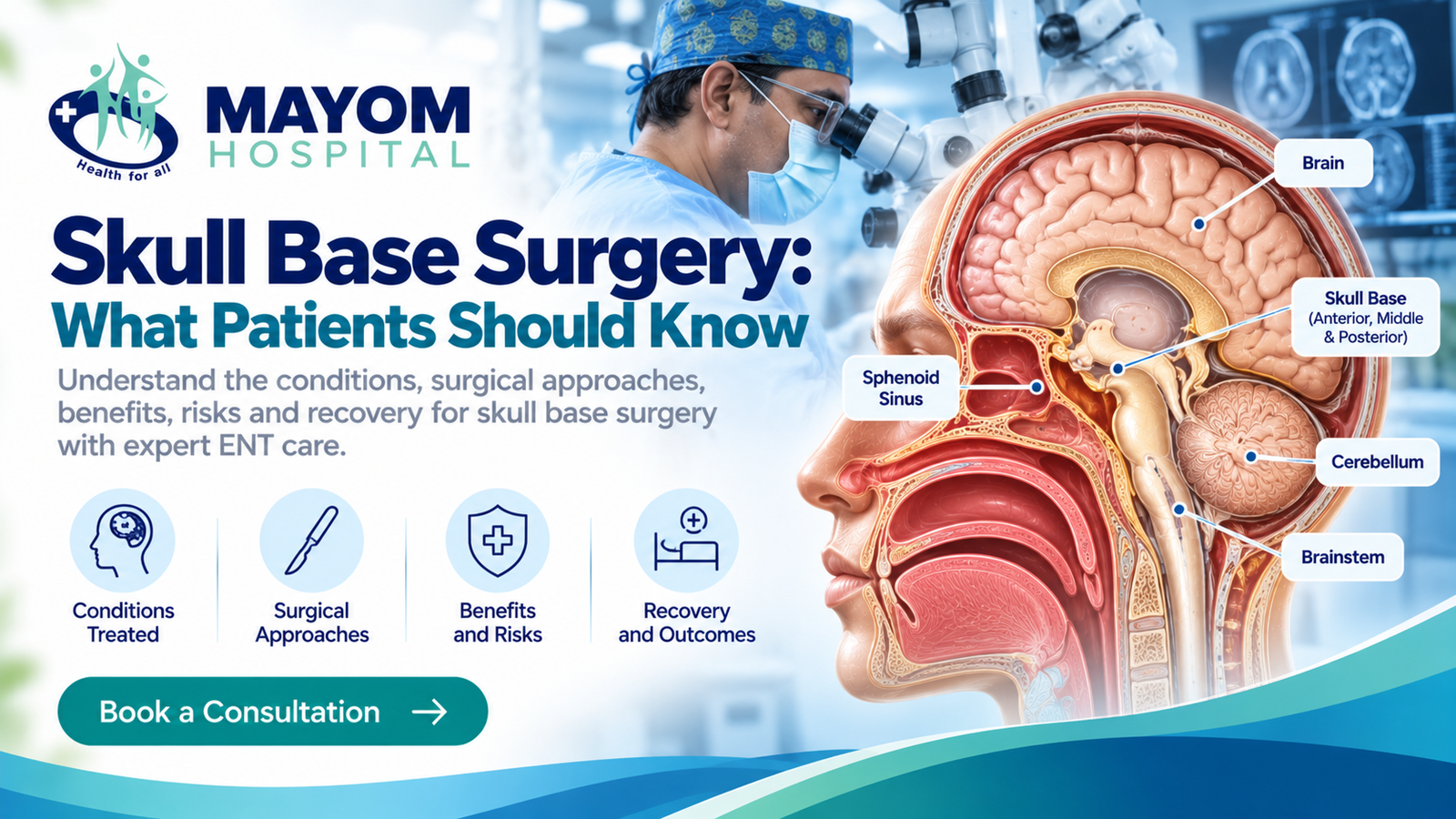
The skull base is the thick floor of the skull. It sits underneath the brain and above your nose, sinuses, eyes, ears, and the top of your neck. Think of it as the roof of your face and the floor of your brain.
It is not a flat floor. It has many small openings through which important structures pass, including:
- The nerves for vision, smell, hearing, balance, facial movement, facial sensation, and swallowing
- The major blood vessels that carry blood to and from the brain, including the carotid arteries
Because so many critical structures are packed into such a small area, surgery here needs great precision and a team with experience.
What Is Skull Base Surgery?
Skull base surgery is a group of operations used to treat conditions that grow in, on, or near the skull base. The goal depends on the condition: to remove a tumour, repair a leak, relieve pressure on a nerve, or treat an infection.
The surgery can be done in two broad ways:
- Endoscopic (through the nose): A thin camera and fine instruments go through the nostrils. There is no cut on the face.
- Open (through the skull or around the ear/face): The surgeon reaches the area through a planned opening in the skull or face when the lesion cannot be safely reached through the nose.
Some operations combine both. Your team chooses the approach based on where the problem is, how big it is, and which nerves and vessels are nearby.
Conditions That May Need Skull Base Surgery
Tumours (many are benign, meaning non-cancerous, but can still cause serious problems because of where they grow):
- Pituitary tumours
- Meningiomas
- Vestibular schwannoma (acoustic neuroma), a growth on the hearing and balance nerve
- Craniopharyngioma, chordoma, and other rarer growths
- Juvenile angiofibroma, a blood-rich growth seen mostly in teenage boys
- Cancers of the nose and sinuses that spread towards the skull base
CSF leak: Cerebrospinal fluid (CSF) is the fluid around the brain. A hole in the skull base can let it leak into the nose or ear, and this can raise the risk of meningitis.
Injury: Head and facial injuries that fracture the skull base, cause a leak, or press on nerves.
Infections: Serious infections of the sinuses or bone that spread towards the skull base, including some fungal sinus infections.
Other conditions: Bone disorders such as fibrous dysplasia, and some malformations present from birth.
Symptoms That May Point to a Skull Base Problem
Symptoms depend on the location. Many of them are common and usually caused by something much simpler, so one symptom alone does not mean you have a skull base problem. Doctors pay attention when symptoms are persistent, one-sided, or come together.
| Area | Possible symptoms |
|---|---|
| Nose and sinuses | Blockage on one side that does not improve, repeated bleeding from one side, loss of smell, clear watery fluid dripping from the nose |
| Eyes and vision | Blurred or reduced vision, loss of side vision, double vision, a bulging eye |
| Ears and balance | Hearing loss in one ear, ringing, dizziness or imbalance |
| Face and nerves | Numbness, tingling, or pain in the face, facial weakness |
| Throat | Voice change, difficulty swallowing |
| Head | Persistent headache that is new or getting worse |
| Hormones | With pituitary tumours: unexplained changes in periods, growth, weight, or energy |
Most nasal blockage is caused by sinusitis, polyps, or a deviated septum. Skull base conditions are rare. But a blockage or bleeding that stays on one side only deserves a proper endoscopic examination.
Get urgent medical care if:
- Clear fluid drips from your nose or ear with fever, stiff neck, or severe headache
- You have sudden vision loss or double vision
- A head injury is followed by clear fluid from the nose or ear, or by confusion
- A severe, sudden headache comes on unlike any you have had before
How Is It Diagnosed?
A skull base problem is rarely diagnosed from one test. Your doctors usually combine:
- Clinical examination of the nose, ears, eyes, and nerves
- Nasal endoscopy, a thin camera that shows the nose and the back of the nose clearly. See what nasal endoscopy involves.
- CT scan, which shows bone detail very well. Mayom Hospital has an on-site CT scan facility.
- MRI, which shows soft tissue, tumours, and nerves in detail
- Angiography (CT or MR), when blood vessels are involved
- Hearing and vision tests, including visual field testing
- Blood tests, such as hormone levels for pituitary problems
- Biopsy, when a growth needs to be identified
- Tests for CSF leak, such as testing the fluid for a specific marker
Complex cases are often discussed by a multidisciplinary team (a "tumour board"), so the decision does not rest on one doctor's opinion.
Is Surgery Always Needed?
No. Surgery is one of several options, and it is not always the first one.
| Option | When it may be used |
|---|---|
| Watchful waiting (observation) | Small, slow-growing, benign lesions with few or no symptoms, followed with regular scans |
| Medicines | Some pituitary tumours respond well to medication, and some infections need long antibiotic or antifungal courses |
| Radiotherapy or radiosurgery | For certain tumours, as a main treatment or after surgery, to treat what remains |
| Surgery | Tumours that are growing or pressing on nerves, vision, or the brain, cancers, CSF leaks, and complications of injury or infection |
| Combined treatment | Surgery followed by radiation or other therapy, depending on the tumour type |
A good team tells you what happens if you choose not to operate, and what the realistic goal of surgery is: complete removal, partial removal to relieve pressure, or control of the disease.
Endoscopic vs Open Skull Base Surgery
| Endoscopic (through the nose) | Open approaches | |
|---|---|---|
| How | Camera and instruments through the nostrils | Planned opening in the skull, or approaches around the ear or face |
| External cut | None | Yes, usually hidden in the hairline or behind the ear |
| Best suited for | Many lesions in the front and middle of the skull base, pituitary region, and CSF leak repair | Lesions that are large, lateral, or too close to critical structures to reach safely through the nose |
| Typical recovery | Often shorter hospital stay | Usually longer hospital stay and recovery |
| Limits | Not every location or tumour is reachable | More invasive, with different risks |
Neither is "better" in general. The right choice is the one that lets the team treat your problem safely. Ask your surgeon why they recommend one over the other, and what the backup plan is.
Who Is on the Surgical Team?
Skull base surgery is a team effort. Depending on the case, the team may include:
- A neurosurgeon and an ENT / head and neck surgeon, often operating together
- Neuro-anaesthesia and neuro-intensive care specialists
- Radiologists, who plan the approach from scans
- An endocrinologist (for pituitary and hormone problems)
- An ophthalmologist and an audiologist
- Oncologists and radiation specialists, if the condition is a tumour
- Physiotherapy, speech and swallowing therapists, for rehabilitation
What to Expect Before, During, and After Surgery
Before surgery
- Scans, blood tests, and fitness checks for anaesthesia
- A full list of your medicines. Blood thinners, aspirin, and some supplements may need to be stopped, only on your doctor's advice
- A clear discussion of the goal, the risks, and the alternatives, with time to ask questions
- Stopping smoking, which improves healing
During surgery
- Surgery is done under general anaesthesia
- Teams commonly use image guidance (navigation) to follow the plan on the scan, and nerve monitoring in selected cases. Ask which tools will be used for your case.
- Duration varies widely, from a few hours to most of a day for complex operations
- The skull base is rebuilt at the end when needed, using tissue such as fat, fascia, or a nasal lining flap, to keep brain fluid sealed
After surgery
Recovery depends on the condition and approach, so treat these as general guides, not promises.
| When | What to expect |
|---|---|
| First 1 to 3 days | Often monitored in a high-dependency unit or ICU. Headache, nasal blockage, fatigue |
| Hospital stay | From a few days to a week or more, depending on the surgery |
| First 2 to 4 weeks | Gradual return to light daily activity. Nasal crusting, tiredness |
| Several weeks | Avoid straining, heavy lifting, and blowing your nose, as advised by your surgeon, to protect the repair |
| Months | Full recovery. Regular check-ups and scans, and hormone tests where relevant |
Risks and Complications
Skull base surgery can be life-changing and sometimes life-saving, but it carries real risks. Which risks apply to you depends on your condition, its location, and its size. They can include:
- Bleeding
- Infection, including meningitis
- CSF leak after surgery, which may need a repair
- Nerve injury, affecting vision, hearing, facial movement, facial sensation, or swallowing
- Injury to a major blood vessel, or stroke (uncommon)
- Hormone deficiencies after pituitary surgery, which may need long-term replacement
- Loss of smell
- Residual or returning tumour, which may need further treatment
- Risks from general anaesthesia
Ask your surgeon to explain which of these are most relevant to you, rather than receiving a general list.
Questions to Ask Before You Decide
- What exactly is the diagnosis, and what happens if we wait or do nothing?
- What is the goal of surgery: remove everything, relieve pressure, or control the disease?
- Why this approach (endoscopic or open), and what are the alternatives?
- How often does your team treat this specific condition?
- Who will be in the operating team, and who will be responsible for my care afterwards?
- What are the main risks for me, and how are they handled?
- What intensive care and emergency backup does the hospital have?
- How long will I stay, and what will recovery look like at home?
- Will I need radiation or other treatment afterwards?
- What follow-up scans and tests will I need?
A good doctor will welcome these questions and will also support you in taking a second opinion.
How to Choose a Hospital and Team
Look for:
- A multidisciplinary team (neurosurgery + ENT/head-neck + anaesthesia + radiology)
- Neuro-intensive care and 24/7 emergency backup
- Imaging, navigation, and monitoring facilities
- Honest discussion of risks, alternatives, and realistic outcomes
- A clear plan for follow-up and rehabilitation
Be cautious of anyone who promises a guaranteed result, avoids discussing risks, or discourages a second opinion.
What Does Skull Base Surgery Cost?
The cost depends on the condition, the approach, the length of surgery and ICU stay, implants or materials used, tests, and your insurance or TPA. A written estimate after the diagnosis is complete is the most reliable way to know. You can check Mayom Hospital's empanelments page for insurer and TPA details.
ENT Evaluation at Mayom Hospital, Gurgaon
Many skull base conditions first show up as nose, ear, or sinus symptoms. At Mayom Hospital, D-Block, South City 1, Gurgaon, the ENT & Head-Neck Surgery team can evaluate such symptoms with:
- Nasal endoscopy and a detailed ENT examination
- CT scan on site
- Hearing and ear assessment
- Collaboration with the hospital's neurology and cancer care teams where a case needs it
You can consult Dr. Manish Prakash (ENT, Head & Neck Surgery) for an evaluation, so that your symptoms are properly assessed and the right next step is planned. You can also read about our Sinus Surgery services and image-guided navigation in sinus surgery.
? Book an appointment: +91 9999469769
? Address: Mayom Hospital, D-Block, South City 1, Gurgaon
? Emergency (24×7): 0124-4212500
Frequently Asked Questions (FAQs)
1. What is skull base surgery?
Skull base surgery treats conditions that grow in or near the floor of the skull, such as tumours, CSF leaks, injuries, and infections. It can be done through the nose with an endoscope or through an opening in the skull or face, depending on the location.
2. Is skull base surgery dangerous?
It is complex surgery with real risks, because important nerves and blood vessels are close together. The level of risk depends on your condition, its size and location, your health, and the experience of the team. Ask your surgeon to explain the risks that apply to you and compare them with the risks of not operating.
3. Can skull base surgery be done through the nose?
Often, yes, for suitable lesions at the front and middle of the skull base, such as many pituitary tumours and CSF leaks. This avoids an external cut. Not every tumour can be reached this way, and some need an open approach.
4. How long is the recovery after skull base surgery?
It varies. Hospital stay can range from a few days to a week or more. After endoscopic surgery, many people return to light activity within a few weeks, while open surgery usually takes longer. Complete recovery can take months, with regular follow-up.
5. How long does skull base surgery take?
From a few hours to most of a day for complex operations. Your surgeon can give you an estimate for your case.
6. Will I need radiation after surgery, and can the tumour come back?
Sometimes. It depends on the type of tumour and how much could be removed. Some tumours can return, which is why follow-up scans and check-ups are an important part of treatment.
7. Can a CSF leak heal on its own?
Some small leaks settle with rest and conservative measures, but many need a repair because of the risk of meningitis. Clear fluid dripping from the nose or ear needs a prompt specialist evaluation.
8. Which doctors perform skull base surgery?
Usually a team of a neurosurgeon and an ENT or head and neck surgeon, supported by anaesthesia, radiology, and other specialists.
9. Should I get a second opinion before skull base surgery?
Yes, it is reasonable and common for complex surgery. A good surgeon will support it. Bring all your scans and reports.
10. How much does skull base surgery cost?
The cost depends on the condition, the approach, the length of ICU and hospital stay, materials used, tests, and your insurance or TPA. A written estimate after diagnosis is the most reliable.
Final Thoughts
Skull base surgery is specialised, and a diagnosis that needs it can feel overwhelming. But most people feel better after they understand what the problem is, what the options are, and what questions to ask. Take your time, ask for explanations in plain words, and do not hesitate to get a second opinion.
If you have a symptom that stays on one side or does not go away, such as a blocked nose, bleeding, hearing loss, or fluid dripping from the nose, start with a proper examination. Most causes turn out to be simple and treatable, and when they are not, early evaluation gives you more options.