
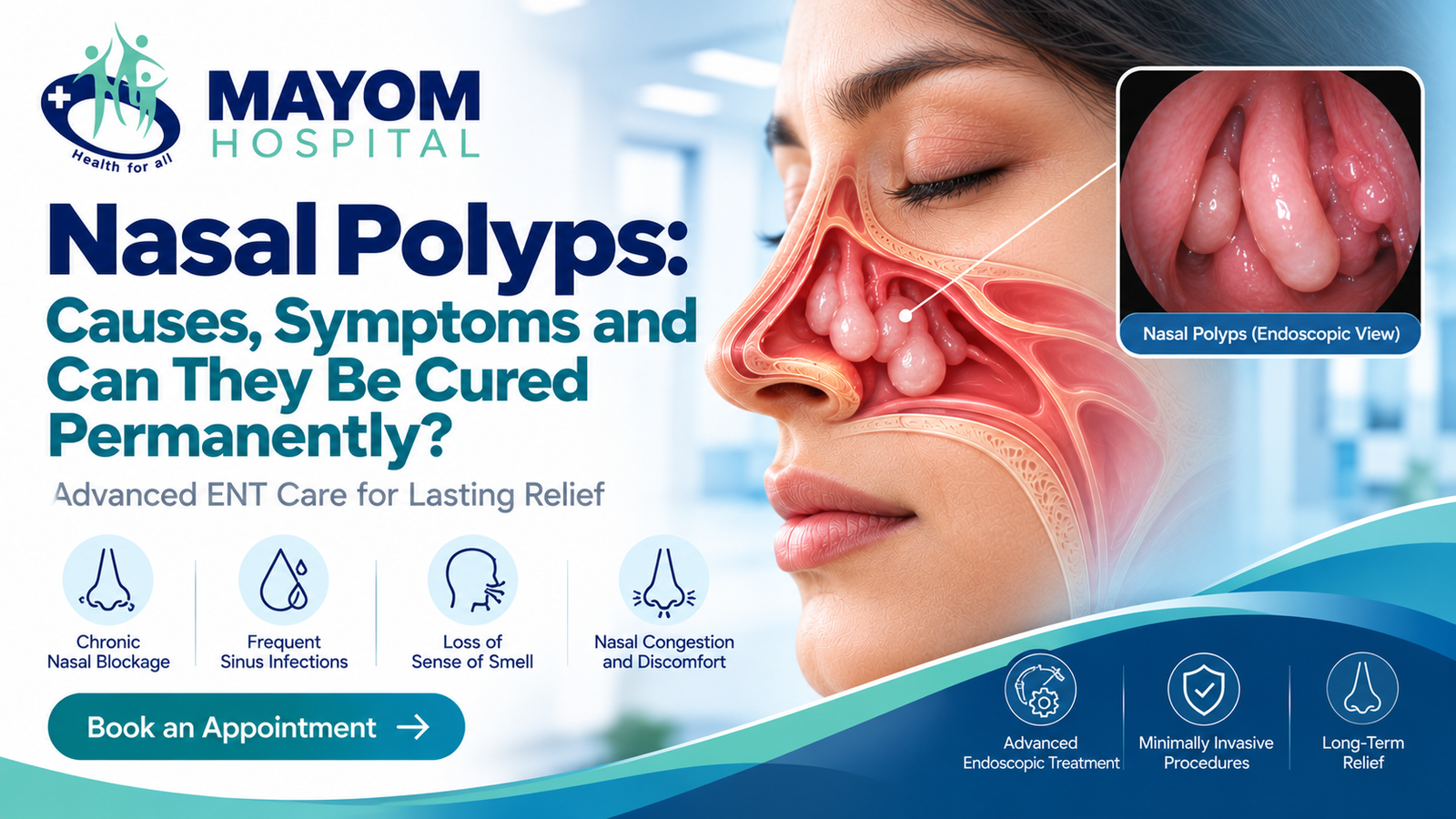
Nasal Polyps: Causes, Symptoms and Can They Be Cured Permanently?
If your nose has been blocked for months, your sense of smell has faded, or sprays and cold medicines have stopped helping, nasal polyps could be the reason. Nasal polyps are soft, painless, non-cancerous growths that form on the lining of the nose and sinuses after long-standing inflammation. They are common, treatable, and very often misunderstood.
Quick answers
- What are nasal polyps? Soft, teardrop or grape-like swellings of the nasal and sinus lining. They are not cancer.
- Can you remove nasal polyps yourself? No. There is no safe or proven way to remove them at home, and trying can cause bleeding, infection and injury.
- Can nasal polyps be cured permanently? They can be controlled for years, but no treatment can guarantee they will never return, because the inflammation behind them can come back.
- Who should you see? An ENT specialist, who can look inside your nose with an endoscope and confirm what you actually have.
What are nasal polyps?
The inside of your nose and sinuses is lined with a moist, delicate tissue called mucosa. When this lining stays inflamed for a long time, parts of it can swell and hang down as polyps. Doctors call this condition chronic rhinosinusitis with nasal polyps.
Polyps are usually painless, which is why many people live with them for a long time. Small polyps may never cause trouble. Larger ones, or clusters, block airflow and drainage from the sinuses, and that is when symptoms begin. They usually appear on both sides of the nose.
Nasal polyps can appear at any age but are most often seen in adults, especially after the age of 40. In children they are uncommon, and a child with nasal polyps should be examined by an ENT specialist to look for an underlying cause.
Symptoms of nasal polyps
Symptoms build slowly and are easy to mistake for a long cold or allergy. The most common are:
- A blocked or stuffy nose that does not clear
- A runny nose or mucus dripping down the back of the throat (post-nasal drip)
- Reduced or lost sense of smell, and food tasting bland
- Pressure or heaviness over the forehead, cheeks and around the eyes
- Headache
- Snoring and mouth breathing, especially at night
- Frequent sinus infections
Because these overlap with other conditions, the table below shows how they usually differ.
| Condition | What it is | Typical clue |
|---|---|---|
| Nasal polyps | Soft growths from inflamed lining | Persistent blockage, loss of smell, usually both sides |
| Chronic sinusitis | Long-term sinus inflammation, with or without polyps | Facial pressure, thick discharge lasting 12 weeks or more |
| Deviated septum | Crooked wall between the nostrils | Blockage that is worse on one side |
| Cold or sinus infection | Short-term infection | Improves within 7 to 10 days |
Only an examination can tell these apart. If your blockage has lasted more than a few weeks, do not wait it out.
What causes nasal polyps?
Doctors do not know exactly why polyps form in some people, but chronic inflammation of the nose and sinuses is at the centre of it. The following conditions are commonly linked with polyps:
- Allergies: long-standing allergic rhinitis keeps the lining swollen. Read more on how allergies affect your ears, nose and throat.
- Asthma: polyps and asthma often occur together, so a person with one should be checked for the other. See our guide to asthma symptoms, causes and treatment.
- Aspirin or NSAID sensitivity: some people with asthma and polyps react badly to aspirin or painkillers like ibuprofen.
- Repeated or chronic sinus infections, including fungal sinusitis.
- Cystic fibrosis, a genetic condition that thickens mucus, which is why polyps in a child need a proper work-up.
- Rare immune conditions that inflame blood vessels and airways.
Polyps are not caused by dirty air, a cold drink or "heat in the body", and you cannot catch them from anyone.
How to remove nasal polyps yourself: why you shouldn't
Many websites list "ways to remove nasal polyps yourself". Here is the honest answer: there is no safe, proven way to remove nasal polyps at home.
- Polyps often sit deep in the sinus openings where you cannot see or reach them.
- Pulling, cutting or burning tissue inside the nose can cause heavy bleeding and infection.
- The sinuses sit right next to the eyes and the base of the skull. A wrong move in this area can cause serious harm.
- Not every growth in the nose is a polyp. A growth on one side only, or one that bleeds, can be something else, such as a cyst or tumour. See our article on cysts and tumours in the nose.
What you can safely do at home is support the treatment your ENT specialist prescribes:
- Saline nasal rinses to flush out mucus and allergens. Use distilled, sterile or previously boiled and cooled water, never plain tap water.
- Steam inhalation or a humidifier for comfort. This eases symptoms but does not shrink polyps.
- Avoiding triggers such as cigarette smoke, dust and strong fumes, and managing allergies properly.
Herbal pastes, oils, garlic, turmeric and similar "cures" have no reliable evidence for shrinking polyps. Putting them in your nose can irritate the lining and make things worse.
How are nasal polyps diagnosed?
Diagnosis is simple and quick. Your ENT specialist will:
- Ask about your symptoms, allergies, asthma and any medicines that upset you.
- Look inside the nose with a thin camera. This is called nasal endoscopy and takes only a few minutes in the clinic.
- Order a CT scan of the sinuses when needed, to see how far the polyps extend and to plan treatment or surgery.
- Arrange allergy tests or a biopsy in selected cases, for example if a polyp looks unusual or is only on one side.
Treatment options for nasal polyps
Treatment aims to shrink the polyps, reopen the airways and keep the inflammation under control. Most people start with medicines.
1. Medicines
- Steroid nasal sprays are the usual first treatment. They reduce swelling in the lining and often shrink small and medium polyps. They need to be used regularly for several weeks before you judge the result.
- Short courses of oral steroids may be prescribed for larger polyps. They work faster but are used carefully, especially in people with diabetes, high blood pressure or other conditions.
- Saline irrigation keeps the nose clean and helps sprays reach the lining.
- Antibiotics or allergy medicines are added only when there is an infection or an allergy to treat.
- Biologic injections can be considered by an ENT specialist for severe polyps that keep returning despite other treatment. Suitability and availability vary from patient to patient.
2. Surgery
When polyps are large or medicines are not enough, endoscopic sinus surgery removes the polyps and opens the blocked sinus passages through the nostrils, with no cuts on the face. Opening the sinuses also helps sprays and rinses reach the lining better afterwards. To understand when surgery makes sense, read Sinus Surgery vs Medication and Endoscopic Sinus Surgery for Chronic Sinusitis. In complex cases, image-guided navigation sinus surgery adds extra precision. For aftercare, see our sinus surgery recovery tips.
How to cure nasal polyps permanently: the honest answer
Search for this and you will find promises of a "permanent cure in 10 days". That is not realistic, and it is worth understanding why.
Surgery removes polyps, but it does not switch off the inflammation that created them. If that inflammation stays active, polyps can grow back, sometimes within months and sometimes after several years. That is why even after a successful operation, doctors keep patients on long-term nasal sprays and rinses.
So the realistic goal is long-term control, often called remission: polyps stay small or gone, you can breathe and smell normally, and you avoid repeated surgery. Most people can get there with a plan like this:
- Get a confirmed diagnosis from an ENT specialist rather than guessing.
- Start medical treatment and stick to it, even after you feel better.
- Treat the underlying cause, whether that is allergy, asthma or chronic sinus infection.
- Consider surgery if polyps are large, symptoms persist, or you keep needing steroid tablets.
- Keep up maintenance with prescribed sprays and saline rinses after surgery.
- Go for regular follow-ups so that regrowth is caught early, when it is easiest to treat.
"How I cured my nasal polyps": what those stories really tell you
Online stories often credit one herb, oil or diet for a cure. When you look closely, the person has usually done one of three things: received proper medical treatment and then credited the home remedy, had temporary relief that did not last, or never had polyps in the first place (swollen turbinates or a deviated septum can feel the same).
The people who report lasting relief almost always did the same unglamorous things: they got the diagnosis confirmed, treated the inflammation with medicines or surgery, and kept up the maintenance. That is the real recipe, and it is what we follow with our patients.
When to see an ENT specialist
Book a consultation if your nasal blockage or loss of smell lasts more than 2 to 3 weeks, if you have repeated sinus infections, or if sprays from the chemist stop working.
See a doctor urgently if you have:
- Vision changes, double vision or difficulty moving the eyes
- Swelling or redness around the eyes
- Severe headache with high fever or a stiff neck
- Repeated or heavy nosebleeds. See causes of nosebleeds.
- A growth or blockage on one side only that keeps getting worse
Untreated polyps can also contribute to disturbed sleep. If you snore loudly or wake up tired, read about snoring and how ENTs treat sleep apnea. For long-term nasal blockage from other causes, see nasal airway obstruction.
Nasal polyp treatment at Mayom Hospital, Gurgaon
At Mayom Hospital, our ENT and head-neck surgery team examines your nose with endoscopy, plans imaging when it is needed, and builds a treatment plan around your symptoms, allergies and general health. That can mean medicines alone, or sinus surgery followed by a long-term care plan. You can meet our ENT specialists on the doctors page, including Dr. Manish Prakash.
Book an appointment: call +91 9999469769 or visit our contact page. Mayom Hospital, D-Block, South City 1, Gurgaon.
Frequently asked questions about nasal polyps
Are nasal polyps cancerous?
No. Nasal polyps are benign. However, other growths in the nose can look similar, which is why one-sided or bleeding growths should always be checked by an ENT specialist.
Can nasal polyps go away on their own?
Small polyps that cause no symptoms may need no treatment. Polyps that block the nose or smell rarely disappear without treatment and usually need medicines or surgery.
Can nasal polyps be cured without surgery?
Many polyps shrink well with steroid sprays and other medicines, and some people never need an operation. Surgery is considered when medicines are not enough. Either way, long-term maintenance matters.
Do nasal polyps grow back after surgery?
They can. Surgery removes the polyps but not the underlying inflammation, so regular sprays, rinses and follow-ups are important to keep them from returning.
Which doctor treats nasal polyps?
An ENT specialist (otolaryngologist) diagnoses and treats nasal polyps. If asthma or allergy is involved, they may work together with a chest physician or allergy specialist.
Can nasal polyps cause snoring or sleep problems?
Yes. Blocked nasal airflow can cause snoring and mouth breathing, and may worsen sleep-disordered breathing in some people.